Detoxification is something we talk about often in the world of integrative health. There are many tools for supporting detoxification, and not all of them serve the same purpose.
In this article, we’ll focus on one specific category — binders. We’ll look at what they are, how they fit into the bigger detoxification picture, and how different types – including bentonite clay, modified citrus pectin (MCP), zeolite, activated charcoal, and chlorella – compare.
What Is Detoxification?
Detoxification is a multi-step biological process that allows the body to process and eliminate waste. It is happening continuously, whether or not we are thinking about it.
Detoxification involves several organs and is often described in three phases.
Phase I is transformation. In this phase, enzymes in the liver chemically modify fat-soluble compounds, including environmental exposures, metabolic byproducts, and hormones, into intermediate forms. These intermediates can sometimes be more reactive than the original compounds.
Phase II is conjugation. Here, the liver attaches specific molecules (such as glutathione, sulfur groups, or amino acids) to those intermediates. This makes them more water-soluble and less reactive, preparing them for removal from the body.
Phase III is elimination. Once processed and packaged, these compounds are transported out of the liver either through the kidneys into urine or through bile into the digestive tract. When released into bile, they enter the intestines and are meant to leave the body through stool.
If phase three is ineffective, some of these compounds can be reabsorbed. In other words, the body does the work of processing the toxins, but they are not fully eliminated.
To learn more, read this article: How Does Detoxification Work? Understanding Phase I, Phase II, and Phase III Detoxification
What Are Binders?
Binders are substances that can attract and attach to certain compounds in the gut. Once bound, those compounds are carried out of the body through bowel movements rather than being reabsorbed.
This matters because many environmental exposures – including certain heavy metals, microbial byproducts, and metabolic waste products – are processed by the liver and released into bile. From there, they enter the digestive tract. Without adequate fiber, hydration, and elimination, some of these compounds may be reabsorbed through what is known as enterohepatic recirculation.
Binders work within the digestive tract to attach to these compounds at this stage, helping reduce the likelihood of reabsorption and supporting their removal.
About The Different Binders
Not all binders are the same. While they all support elimination, their structure, strength, and ideal use can vary. Some are better for short-term support, while others are suited for gentler, longer-term use.
Here’s a closer look at the most common options and how they differ.
Bentonite Clay
Bentonite clay is a naturally occurring volcanic ash clay rich in minerals. It carries a negative electrical charge, which allows it to attract positively charged particles in the digestive tract (1).
Because of its structure, bentonite clay has traditionally been used to bind certain heavy metals, microbial byproducts, and environmental compounds.
It is often used:
- During short-term detox protocols,
- In cases of suspected mold exposure,
- For digestive support when occasional bloating is present.
Bentonite clay can be very effective, but it must be used thoughtfully. It can be constipating in some individuals and should always be paired with adequate hydration, mineral support, and regular bowel movements.
For children, or sensitive adults, bentonite clay baths can be a supportive alternative. Bentonite clay baths offer a gentle way to benefit from the mineral properties of clay without some of the digestive side effects that can occur with oral use.
To learn about bentonite clay, read this article: Bentonite & Epsom Salt Bath For Skin Health & Detox
Modified Citrus Pectin (MCP)
Modified Citrus Pectin (MCP) is derived from the pith of citrus fruits. Through modification, its molecular size is reduced so it dissolves more easily and interacts differently in the body than standard dietary pectin.
MCP has been studied for its ability to bind certain heavy metals and support healthy inflammatory balance (2). It is generally considered gentler than some clay-based binders and is often better tolerated for longer-term use.
Modified citrus pectin is often chosen when:
- Heavy metal support is a primary focus,
- A gradual, long-term approach is preferred,
- Constipation is a concern.
Because it is a soluble fiber, MCP can also support healthy bowel regularity, which is essential during any detoxification protocol.
Zeolite
Zeolite is a naturally occurring mineral formed when volcanic lava interacts with seawater. Its structure resembles a honeycomb cage, allowing it to trap certain compounds within its lattice. The most commonly used form in supplements is clinoptilolite zeolite.
Zeolite is often discussed in the context of heavy metal binding and environmental exposure support. However, quality is critical. Poorly sourced zeolite can contain contaminants, so proper purification and rigorous third-party testing are essential when considering this binder.
It’s also important to approach bold marketing claims with discernment – especially when zeolite is promoted as a “fix-all” solution for children. No single binder addresses every concern, and detoxification is a complex, multi-step physiological process. Zeolite, like other binders, works primarily within the digestive tract and supports elimination of compounds that are already being excreted into bile. It does not replace foundational health practices, nor should it be viewed as a standalone solution for complex pediatric issues.
As with all mineral-based binders, adequate hydration and regular bowel movements are essential to ensure safe and effective elimination.
Activated Charcoal
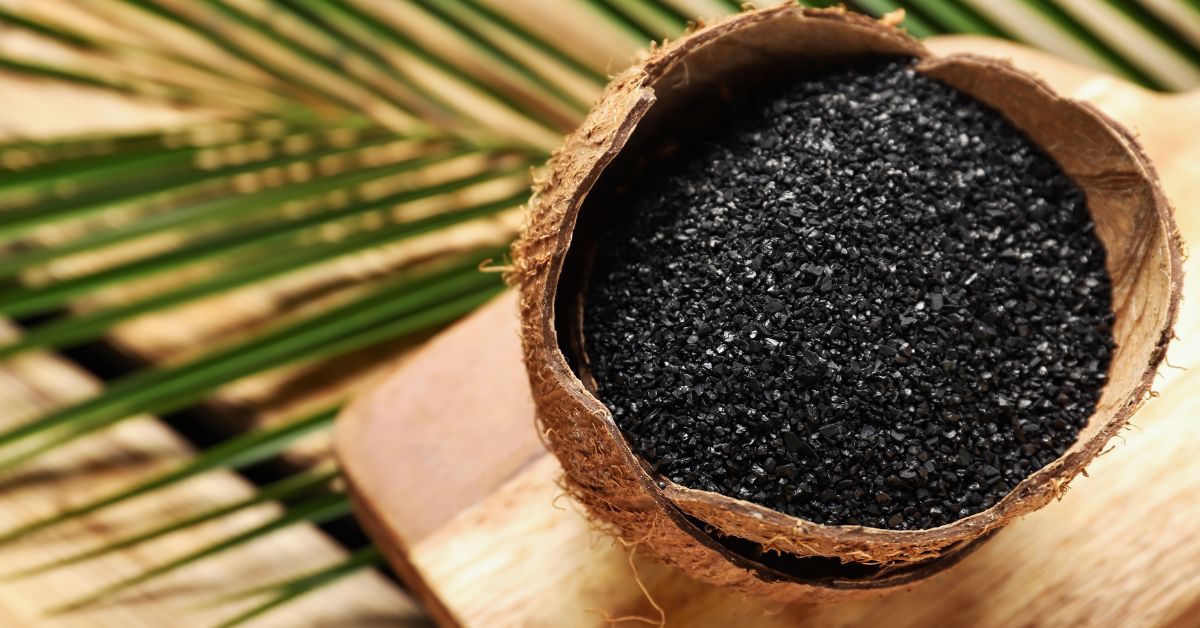
Activated charcoal is one of the most well-known and widely used binders. It is created by heating carbon-rich materials (such as coconut shells) at high temperatures in a way that creates an extremely porous surface. This dramatically increases its surface area, allowing it to absorb (bind to the surface of) a wide range of compounds.
Activated charcoal works through adsorption, meaning compounds adhere to its surface rather than being absorbed into it. This makes it particularly useful in acute situations.
Activated charcoal is commonly used:
- During occasional digestive upset,
- For food-related discomfort,
- In situations involving environmental exposures,
- As part of broader detox protocols.
In clinical settings, activated charcoal has long been used in emergency medicine for certain types of acute ingestion (3). In integrative practice, it is used more gently and strategically.
Because activated charcoal is non-selective, it can bind beneficial compounds as well – including medications and nutrients. For this reason, it should always be taken away from supplements and medications by at least 1-2 hours unless otherwise directed by a healthcare professional.
Chlorella
Chlorella is a freshwater green algae that is both a nutrient-dense superfood and a functional binder.
Its cell wall contains compounds that can bind certain heavy metals and environmental compounds in the digestive tract. At the same time, chlorella provides chlorophyll, vitamins, minerals, and phytonutrients that support cellular health (4).
This dual function makes chlorella unique. It does not act as aggressively as charcoal or clay, but it offers supportive, gentle binding alongside nutritional replenishment.
Chlorella is included in several of our detox formulations because it:
- Supports gentle binding,
- Provides mineral support during detoxification,
- Contributes antioxidant activity,
- Supports overall cellular resilience.
As with all algae-based products, purity and testing are essential to ensure freedom from contaminants.
To learn more about chlorella, read this article: Detoxification Benefits of Chlorophyll and Chlorella
Choosing the Right Binder
There is no single “best” binder. The right choice depends on:
- The individual’s age and health status,
- The type of exposure being addressed,
- Digestive function and bowel regularity,
- Tolerance and sensitivity,
- Whether short-term or long-term support is needed.
Some practitioners rotate or combine binders. In many cases, supporting the body’s natural detox pathways – hydration, minerals, fiber, sweating, and adequate protein intake – is an important part of any detoxification supporting protocol.
Binders should never replace foundational health habits. Before starting any binder ensure:
- Daily bowel movements,
- Adequate hydration,
- Sufficient mineral intake,
- Stable blood sugar and protein intake.
Because binders can interfere with nutrient absorption, they should generally be spaced away from meals, supplements, and medications unless otherwise directed.
Children, pregnant or breastfeeding mothers, and individuals with complex medical conditions should always consult a qualified healthcare professional before beginning a detox protocol.
When Are Binders Typically Considered?
Binders are most commonly used in situations such as:
- Confirmed or strongly suspected mold exposure,
- Documented heavy metal burden under practitioner supervision,
- Acute digestive distress in short-term situations,
- Specific practitioner-guided detox protocols.
They are not typically necessary for healthy children with normal digestion and no known exposures.
When Are Binders Not Routinely Needed?
Binders are not generally recommended for:
- Routine wellness in healthy children,
- After every illness,
- As a substitute for medical treatment,
- Without regular bowel movements,
- In children who are constipated.
Detoxification is an ongoing biological process. Most children with healthy liver function, adequate hydration, and daily bowel movements do not require routine binder support.
Summary
Detoxification is a multi-step process, and binders support the elimination phase. After the liver transforms and packages unwanted compounds, they must leave the body efficiently through stool or urine. Binders work within the digestive tract to help reduce reabsorption and support this final exit step.
Different binders have different strengths, ideal uses, and considerations, and no single option is right for every situation. When used alongside hydration, mineral support, and healthy digestion, binders can be a helpful tool within a broader, balanced detoxification strategy.
References:
- Moosavi M. Bentonite Clay as a Natural Remedy: A Brief Review. Iran J Public Health. 2017 Sep;46(9):1176-1183. PMID: 29026782; PMCID: PMC5632318.
- Eliaz I, Weil E, Wilk B. Integrative medicine and the role of modified citrus pectin/alginates in heavy metal chelation and detoxification–five case reports. Forsch Komplementmed. 2007 Dec;14(6):358-64. doi: 10.1159/000109829. Epub 2007 Dec 12. PMID: 18219211.
- Silberman J, Galuska MA, Taylor A. Activated Charcoal. [Updated 2023 Apr 26]. In: StatPearls [Internet]. Treasure Island (FL): StatPearls Publishing; 2025 Jan-. Available from: https://www.ncbi.nlm.nih.gov/books/NBK482294/
- Elbasuni SS, Ibrahim SS, Elsabagh R, Nada MO, Elshemy MA, Ismail AK, Mansour HM, Ghamry HI, Ibrahim SF, Alsaati I, Abdeen A, Said AM. The Preferential Therapeutic Potential of Chlorella vulgaris against Aflatoxin-Induced Hepatic Injury in Quail. Toxins (Basel). 2022 Dec 1;14(12):843. doi: 10.3390/toxins14120843. PMID: 36548739; PMCID: PMC9787596.