Cold sores are a common viral infection caused by Herpes Simplex Virus Type 1 (HSV-1). Most adults are exposed during childhood, and in older children and adults, cold sores tend to be a mild, self-limiting condition affecting the lips and surrounding skin.
However, infants under 6 months old are more vulnerable to complications from HSV-1 infection because their immune systems are still developing. In this age group, HSV-1 can spread more easily inside the body, and early recognition and treatment are important.
This article explains how cold sores spread, what symptoms to watch for in infants, the actual risks in babies, and more.
How Common Is HSV-1?
HSV-1 (the virus that causes cold sores) is extremely common. Studies show that:
- 50–80% of adults carry HSV-1 (1).
- Most individuals acquire it during childhood (2).
- Many people transmit the virus before they ever get a visible cold sore (1).
Because HSV-1 is so widespread amongst the population, infants are frequently exposed through kissing and shared saliva contact unless precautions are taken.
How Are Cold Sores Spread?
HSV-1 spreads through direct contact with saliva (1,2). This includes:
- Kissing the face, mouth, or hands
- Sharing utensils, food, pacifiers, bottles, or washcloths
- Touching a cold sore and then touching a baby’s face or hands
The virus can spread even before a visible sore appears, during the “tingling” or pre-sore phase. Because infants bring their hands to their mouths frequently, kissing hands carries the same risk as kissing their face.

A Note on HSV-1 and Birth: How HSV-1 Can Also Affect the Genitals
Although HSV-1 is most commonly associated with cold sores, it can also infect the genital area, usually through oral–genital contact. Genital HSV-1 generally causes less frequent recurrences than HSV-2, but the virus can still be present on the skin and shed even when no symptoms are visible.
HSV-1 transmission during birth occurs when the virus is active in the genital tract at the time of delivery. This is mainly a concern when a mother experiences a first-time (primary) genital HSV-1 infection in late pregnancy or during labor, because protective IgG antibodies have not yet developed (3).
If the mother has had HSV-1 before pregnancy (oral or genital), those IgG antibodies cross the placenta, providing the baby with passive immune protection in early infancy. In this case, recurrent genital HSV-1 infections are considered low risk, and vaginal delivery is usually safe. Antiviral medication or cesarean birth may be recommended if a primary genital outbreak occurs near delivery (3).
You might be interested in this article, too: Understanding Newborn Antibiotic Eye Ointment
Why Cold Sores Are More Serious in Infants
In older children and adults, HSV-1 (the virus that causes cold sores) usually stays near the lips because a more mature immune system can keep the virus contained. For young infants, especially under 6 months, the immune system is still developing. This means the body may not yet be able to control the virus as effectively if it becomes active (4).
When HSV-1 enters the body of a newborn or young infant, it doesn’t always stay on the surface. In some cases, it can spread internally. This is why we take HSV-1 exposure seriously in this age group – not because oral cold sores themselves are dangerous, but because babies this young don’t yet have the immune protection to limit the virus to one area (4).
How Doctors Classify HSV-1 in Young Infants
When HSV-1 infection occurs in a baby under 42 days old, it is classified based on how far the virus has spread. Understanding these classifications helps providers determine treatment and expected outcomes.
There are three main forms:
- Skin, Eye, and Mouth (SEM) Disease
The virus is limited to the skin, eyes, or mouth. This is the most common and most treatable form of HSV-1 in infants, especially when identified early. - Central Nervous System (CNS) Disease
The virus affects the brain and nervous system, which may cause seizures, difficulty feeding, irritability, or temperature instability. - Disseminated Disease
The virus spreads through the bloodstream to multiple organs (such as the liver, lungs, or brain). This form may not always cause a visible rash, which is why fever or unusual sleepiness in a newborn should always prompt urgent evaluation.
Early recognition and prompt antiviral treatment significantly improve outcomes across all forms.
Signs and Symptoms of Cold Sores/HSV-1 Infection in Infants
If a baby is exposed to HSV-1, symptoms typically appear within 2–12 days after contact (1). Not every baby will show all of the symptoms listed below, but these early cues are important to watch for, especially in infants under 6 months who have less mature immune protection.
Early signs of HSV-1 infection in infants include:
- Small clusters of blisters near the lips, mouth, or scalp: These may look like tiny clear or yellowish bumps and can spread or group together.
- Fever: Fever may be the first noticeable sign, even before blisters appear.
- Red, watery, or irritated eyes: This may indicate herpetic conjunctivitis, which needs prompt evaluation to protect long-term vision.
- Increased irritability or difficulty soothing: Babies may seem uncomfortable in a way that feels different from typical fussiness.
- Decreased appetite or refusal to feed: Pain in the mouth can make feeding harder.
- Sleepiness beyond normal newborn patterns: A baby may seem excessively drowsy or “hard to wake for feeds,” which can be a sign the body is working hard to fight infection.
Any fever in a baby under 8 weeks old should be evaluated by a medical professional, regardless of whether HSV-1 is suspected. Young infants do not always show clear signs of infection, so fever alone is enough reason to seek care.
Herpetic conjunctivitis is not the same as ‘regular’ pink eye. To learn more, read this article: How To Treat Pink Eye Naturally
Diagnosis and Treatment of HSV-1 in the Hospital
If a pediatrician or emergency provider is concerned about possible HSV-1 infection in a young infant, they will move quickly to evaluate. This is because early treatment has a major impact on outcomes.
Evaluation may include (5):
- Swabs of any blisters or lesions: A small swab is used to collect a sample from the blister, mouth, or nose to test for HSV-1 or HSV-2.
- Bloodwork: Blood tests can show whether the virus has entered the bloodstream and help check how the body is responding.
- A lumbar puncture (spinal tap): A spinal tap helps determine if the virus has reached the brain or spinal fluid.
- Eye evaluation if eye symptoms are present: A pediatric ophthalmologist may examine the eyes to look for HSV-related inflammation (which is treatable but needs prompt attention).
If HSV-1 is considered a real possibility, treatment with IV acyclovir usually begins right away, often before test results return. IV acyclovir slows viral replication and allows the immune system to respond. Most infants tolerate acyclovir well.
HSV-1 Prognosis in Newborns
When HSV-1 is recognized early and treated promptly, the prognosis for most infants is very good. Early treatment prevents the virus from spreading deeper into the body and allows the immune system to gain control.
If HSV-1 spreads beyond the skin or mouth before treatment begins (for example into the bloodstream or nervous system), treatment may be longer and follow-up more involved, often for up to six months (5)
A Note About the Virus Going Forward
Once a person is exposed to HSV-1, the virus becomes latent in the body. This means:
- The virus stays in the nerve cells long-term.
- It is usually inactive most of the time.
- The immune system keeps it under control.
This is the same for adults, older children, and infants – the virus does not leave the body, but in most people, it remains quiet and causes no ongoing problems.
As the child grows and the immune system matures, it becomes much better at keeping HSV-1 contained. Some children may never have another visible cold sore. Others may have occasional flare-ups later in life, often triggered by (1):
- Sun exposure
- Illness
- Chapped lips
- Stress
These are manageable and far less concerning than infection in early infancy.
Reducing Risk of Cold Sore Transmission to Infants
HSV-1 spreads through saliva (1). The most effective way to reduce transmission in young infants is to avoid any contact with saliva (5).
This means that no one should kiss the baby’s face or hands. Hands frequently go into the mouth, so kissing the hands carries the same transmission risk as kissing the lips. Relatives, siblings, and visitors should follow the same no-kissing rule, and everyone should wash their hands before touching the baby’s face, mouth, eyes, or any feeding equipment.
Items that come into contact with the baby’s mouth should be treated with the same precaution. This includes pacifiers, bottle nipples, and washcloths. Each feeding item should be used only by the baby and cleaned between uses.
These precautions are most important during the first 6 months of life, when the immune system is still developing and is less able to contain viral spread if exposed.
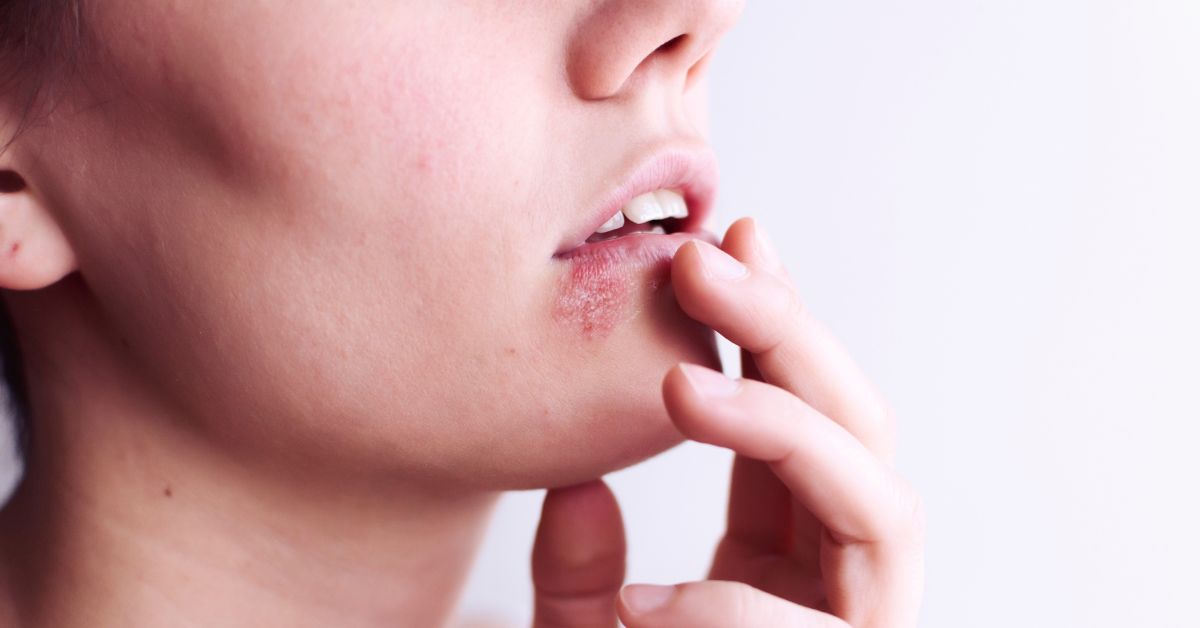
What if a Parent Has a Cold Sore?
Cold sores are common postpartum. Hormonal shifts, stress, sleep disruption, and cracked or dry lips can all trigger HSV-1 to reactivate.
To reduce transmission risk:
- Do not kiss the baby’s face or hands.
- Wash hands after touching the sore or applying ointment.
- Avoid touching the sore and then touching the baby without washing hands.
- Cover the sore with a hydrocolloid cold sore patch to reduce accidental contact.
Breastfeeding is safe as long as there are no sores on the breast (which is very uncommon). HSV-1 is not transmitted through breast milk (6). If a lesion is present on the breast:
- Pump and discard milk from that breast until the lesion is fully healed.
- Continue breastfeeding from the unaffected breast to maintain supply.
Summary
HSV-1 is a very common virus, and most exposures in everyday life are mild. However, young infants have developing immune systems, which means the virus can spread more easily in the body if infection occurs in the first months of life. The goal at this age is to avoid saliva contact. This means no kissing the baby’s face or hands, especially when someone has an active cold sore. If symptoms such as fever, unusual sleepiness, poor feeding, or blisters near the mouth or scalp appear, evaluation should happen promptly, as early treatment dramatically improves outcomes.
References:
- Gopinath D, Koe KH, Maharajan MK, Panda S. A Comprehensive Overview of Epidemiology, Pathogenesis and the Management of Herpes Labialis. Viruses. 2023 Jan 13;15(1):225. doi: 10.3390/v15010225. PMID: 36680265; PMCID: PMC9867007.
- World Health Organization. (2024, December 11). Herpes simplex virus. Who.int; World Health Organization: WHO. https://www.who.int/news-room/fact-sheets/detail/herpes-simplex-virus
- InformedHealth.org [Internet]. Cologne, Germany: Institute for Quality and Efficiency in Health Care (IQWiG); 2006-. Genital herpes: Learn More – Genital herpes in pregnancy. [Updated 2025 Jan 24]. Available from: https://www.ncbi.nlm.nih.gov/books/NBK525779/
- Fernandes ND, Arya K, Syed HA, et al. Congenital Herpes Simplex. [Updated 2024 Apr 21]. In: StatPearls [Internet]. Treasure Island (FL): StatPearls Publishing; 2025 Jan-. Available from: https://www.ncbi.nlm.nih.gov/books/NBK507897/
- Samies NL, James SH. Prevention and treatment of neonatal herpes simplex virus infection. Antiviral Res. 2020 Apr;176:104721. doi: 10.1016/j.antiviral.2020.104721. Epub 2020 Feb 7. PMID: 32044154; PMCID: PMC8713303.
- CDC. (2024). Herpes Simplex Virus and Breastfeeding. Breastfeeding Special Circumstances. https://www.cdc.gov/breastfeeding-special-circumstances/hcp/illnesses-conditions/herpes.html