Car sickness is common in childhood. The good news is that there are simple, supportive strategies that can make car rides more comfortable for your child and less stressful for you.
In this article, we’ll explore why car sickness happens and how to support both the stomach and nervous system before and during car rides – so car trips can feel easier, calmer, and more manageable for everyone.
Why Car Sickness Happens
Car sickness is a type of motion sickness that occurs when the brain receives conflicting signals (1):
- The inner ear senses motion.
- The eyes may be focused on something up close (like a book or screen) and don’t register movement.
- The body is strapped into a seat and feels still.
When these signals don’t match, we can experience nausea, dizziness, yawning, flushing, or vomiting. Children tend to be more sensitive to car sickness because their vestibular (balance) systems are still developing, and data shows that car sickness tends to peak at around age 9 (1).
Early Signs of Car Sickness in Kids
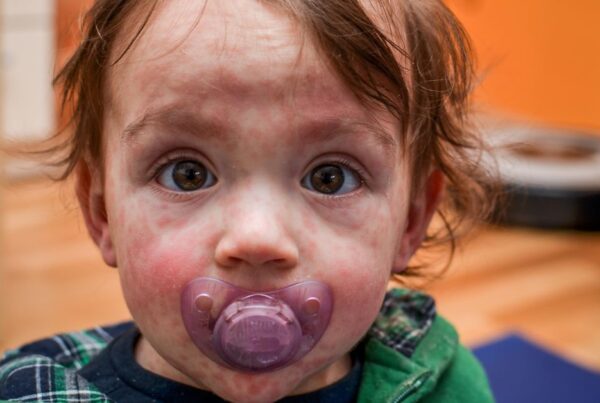
Knowing the early cues can help you intervene before nausea peaks (or be prepared to catch a mess). Signs that your child may be becoming carsick include:
- Suddenly quiet or irritable
- Pale or flushed
- Frequent yawning
- Complaints of tummy discomfort
- Increased saliva
- “I feel weird.” “I feel hot.” “My head hurts.”
When you see these signs, pause stimulation like tablet games or reading, and offer calming support right away.
This article might be helpful, too: Vomiting in Infants and Children: Potential Causes, Home Care Tips, & When To Call a Doctor

Practical Support Tips for Kids Who Get Carsick
A few thoughtful adjustments can make a noticeable difference in how your child feels during car travel. These strategies work by helping the brain, stomach, and nervous system stay in harmony while the body is in motion.
Seat Position & View
If possible, seat your child where they can easily see the road ahead. Watching the forward movement helps the brain sync visual and inner-ear signals. This is less possible for younger kids who are still rear facing, but it’s a good reason (beyond the obvious safety benefits) to keep an older kid in a booster seat for longer.
Encourage your child to look outward rather than down. Reading books, coloring, or watching screens can intensify motion sickness because the eyes and inner ear send conflicting messages. Gazing out the front windshield or toward the horizon usually feels much better. Try playing a game where you’re spotting license plates or other visuals to keep the eyes forward.
Airflow
Fresh, steady airflow can be helpful for car sickness! Slightly crack a window or adjust the air vents so a gentle stream of cool air circulates around your child.
To Eat, or Not to Eat?
Both an empty stomach and a full, heavy stomach can increase nausea. A light snack about 20–30 minutes before driving often works best. Think simple and easy to digest snacks: apple slices, a banana, or a few plain crackers.
Some children respond well to snacking on a small amount of natural sourness (think a tart green apple). As a general tip, be very careful with offering snacks while driving, as this can be a choking hazard. Ice water in a sippy cup can be very helpful, too!
Herbal & Nervous System Support for Car Sickness
Environmental adjustments are often helpful, but some children benefit from further support to settle the stomach and soothe the nervous system.
Ginger Ease™
Ginger has long been used to support the digestive system and help ease nausea (2). Ginger Ease™ can be used before and during car rides to help settle the stomach in a gentle, supportive way. ✝︎
Peace & Calm™ Kids
If your child’s car sickness is worsened by stress or sensory overwhelm, Peace & Calm™ Kids can help support a calmer, more settled nervous system, making travel feel easier and more comfortable. ✝︎
Chamomile Tea
Chamomile has traditionally been used to support both digestion and calm (3). You can offer it warm before leaving or brew and chill it and offer it iced during the drive.

Sea-Bands (Acupressure Wristbands)
Sea-Bands apply gentle pressure to the P6 acupressure point on the inner wrist, a point traditionally associated with supporting nausea relief. They are soft, reusable and non-drowsy. Sea-bands tend to work best when put on before motion begins and kept on for the remainder of the drive.
More Mom-Approved Car Sickness Tricks That Can Make a Big Difference
Here are a few simple, mom-tested tricks that can make car rides a lot more manageable when nausea pops up:
- Keep a cool washcloth or small ice pack in a sealed bag to place on the back of the neck or forehead if discomfort starts.
- Emesis bags are available on Amazon. They fold up small and are great to keep in the car and diaper bag.
- Keep some wet wipes and a change of clothes in the car.
- On longer drives, plan for short breaks outdoors to reset the inner ear and body awareness.
You might like this article, too: Dr. Green Mom’s Top 10 Road Trip Essentials
When to Reach Out to a Doctor About Car Sickness
Most children gradually outgrow motion sensitivity (1). However, if car sickness is frequent, severe, or causing anxiety about travel, speak with your healthcare provider. In some situations, when natural support isn’t helping, pharmaceutical options like Dramamine may be recommended by your provider.
Summary
Car sickness is common in childhood because the brain is still learning to coordinate visual and motion signals. Simple tricks like helping your child look forward instead of down, keeping fresh airflow in the car, offering a light snack beforehand, and using gentle digestive and calming support such as Ginger Ease™, chamomile tea, or Peace & Calm™ Kids can often make a big difference.
Tools like Sea-Bands and cool compresses can also help reduce nausea when it starts. Most children outgrow motion sensitivity with time, but if car sickness is frequent or severe, check in with your healthcare provider for additional guidance.
References:
- Takov V, Tadi P. Motion Sickness. [Updated 2023 Jul 3]. In: StatPearls [Internet]. Treasure Island (FL): StatPearls Publishing; 2025 Jan-. Available from: https://www.ncbi.nlm.nih.gov/books/NBK539706/
- Nunes CP, Rodrigues CC, Cardoso CAF, Cytrynbaum N, Kaufman R, Rzetelna H, Goldwasser G, Santos A, Oliveira L, Geller M. Clinical Evaluation of the Use of Ginger Extract in the Preventive Management of Motion Sickness. Curr Ther Res Clin Exp. 2020 Jun 15;92:100591. doi: 10.1016/j.curtheres.2020.100591. PMID: 32714473; PMCID: PMC7378854.
- Srivastava JK, Shankar E, Gupta S. Chamomile: A herbal medicine of the past with bright future. Mol Med Rep. 2010 Nov 1;3(6):895-901. doi: 10.3892/mmr.2010.377. PMID: 21132119; PMCID: PMC2995283.