Cold sores tend to show up at the most inconvenient times! If you’ve ever wondered how to get rid of a cold sore faster or which natural cold sore remedies actually help, this article walks you through the most effective, research-supported strategies for occasional HSV-1 flare ups.
What Cold Sores Actually Are
Cold sores – also called oral herpes or herpes labialis – are small, fluid-filled blisters caused by Herpes Simplex Virus Type 1 (HSV-1) (1). After the initial exposure, the virus lies dormant inside nearby nerve cells. When triggered by factors like stress, illness, excessive sunlight or weakened immunity, HSV-1 reactivates and travels back to the skin’s surface, causing the familiar tingling, burning, or blistering around the lips (1).
Cold sores are extremely common (1). They are also highly sensitive to the state of your immune system – meaning the more supported your body is, the fewer outbreaks you’ll likely experience and the faster each flare will resolve.
Why Cold Sores Flare
While the exact reason why cold sores flare up is hard to pinpoint, cold sores tend to flare when the body is under stress or when the lips are irritated (1).
Common triggers include:
- Stress or emotional overwhelm
- Poor sleep or travel fatigue
- Sun or wind exposure
- Illness or fever
- Hormonal shifts
- Dry, cracked lips
- Low nutrient status
- Times of immune stress
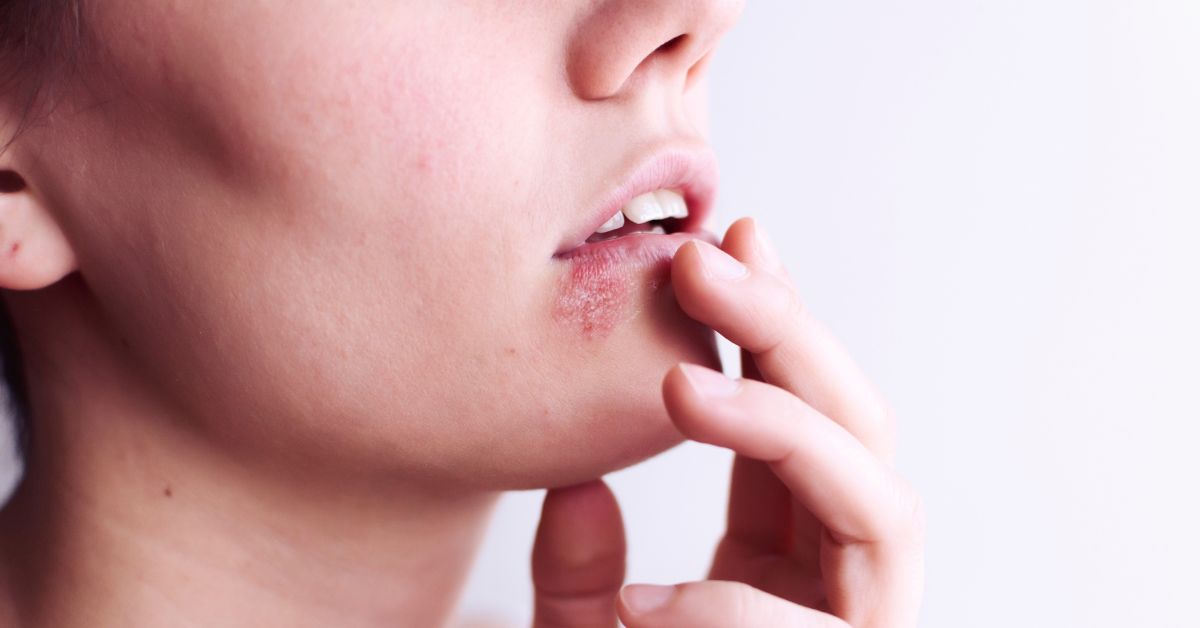
Early Cold Sore Warning Signs
The best time to begin cold sore home care is during the first 24-48 hours before any blisters appear. This early phase is called the prodrome, and it’s when HSV-1 is waking up under the skin.
Common sensations during the prodrome phase of a cold sore include:
- Tingling
- Burning
- Tightness
- Sensitivity
Many people describe it as a small “hot spot,” a tiny buzz under the skin, or a feeling that something is “off” on the lip even though nothing is visible yet. These symptoms may come and go throughout the day.
What To Do at the First Sign of a Cold Sore
Catching a flare early gives you the best chance of shortening the outbreak and reducing severity, so taking action as soon as you notice the first signs of a cold sore is key.
1. Support Your Stress Response
Stress is one of the strongest cold sore reactivation triggers for many people. To support your body during times of stress, try:
- Getting outside each day
- Taking magnesium in the evening
- Prioritizing sleep
- Using calming herbs like lemon balm, chamomile, or kava
A calmer nervous system naturally supports an effective immune response.
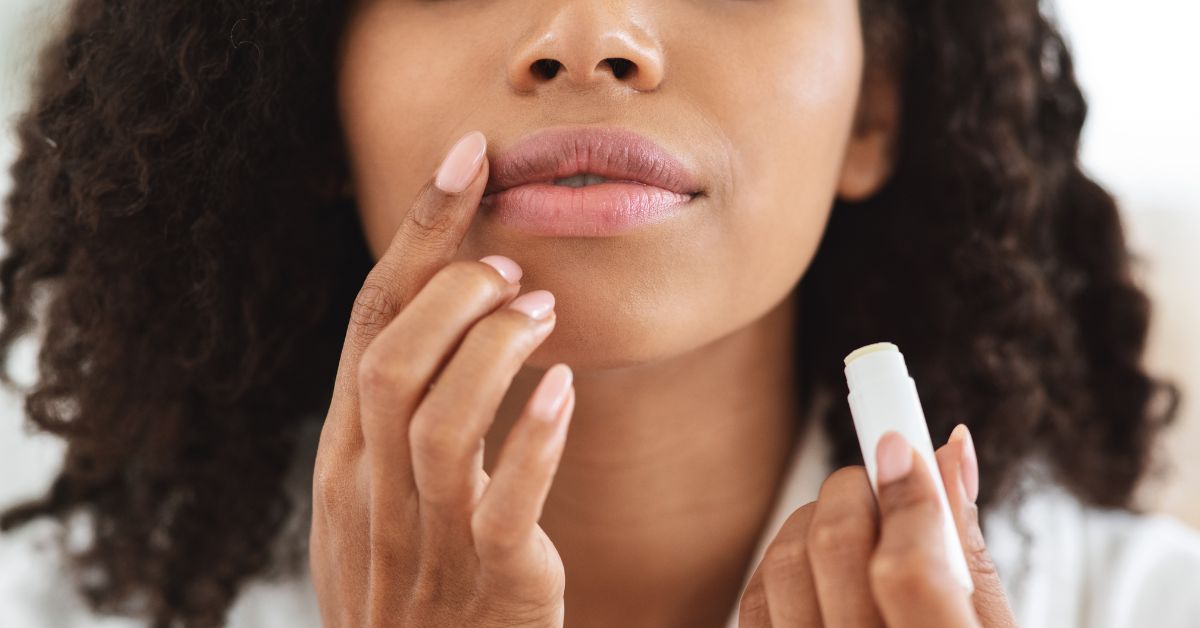
2. Moisturize & Protect the Area
Cold sores tend to worsen when the skin is dry or cracked. Keep the area nourished with your favorite simple, clean lip balm, and avoid highly scented or additive-heavy products that may irritate sensitive skin.
You might like this article: 5 Common Toxins In Skin Care Products
3. Start Nutritional & Herbal Support for Cold Sore Flares
Early nutritional and herbal support helps your body respond more efficiently and may reduce the intensity and duration of the flare (2).
Lemon Balm (Melissa officinalis)
Research shows that topical lemon balm can shorten cold sore flare duration and reduce discomfort associated with cold sore flares-especially when applied early (3). Internal use of lemon balm is also helpful for supporting a calm mood and healthy immune function (4,5).
Temperature Tamer™ Kids is an excellent option because it can be taken internally and dabbed on topically.
Note: I do not recommend applying Mother’s Temperature Tamer™ topically, as the spearmint and ginger in the formula may be irritating to open skin. However, Mother’s Temperature Tamer™ is a wonderful internal option rich in lemon balm to support the body during a flare.
Echinacea
Echinacea is well-known for its ability to support healthy immune function, and herbal remedies containing echinacea may be especially helpful during illness-triggered cold sore flares (6) or times of increased stress (7). It’s a great option to use at the first sign of feeling run down, during travel, or when your immune system needs extra support.
Elderberry
Rich in flavonoids that support a balanced immune response, elderberry may be especially helpful when cold sores appear alongside general immune depletion (8).
To learn more, read this article: Elderberry – A Natural Remedy: Benefits, Uses, & Safety Tips for Families
Zinc
A key nutrient for skin repair and immune balance. Research shows that zinc deficiency can increase the duration of cold sore healing (9). Adults with frequent or slow-healing flares often benefit from zinc support.
Vitamin A
Vitamin A plays a vital role in skin integrity, mucosal protection and overall immune function (10). Low vitamin A makes the skin more vulnerable to irritation and slower to heal.
Beef Liver
Beef liver is one of the most nutrient-dense foods and a powerful whole-food source of vitamin A, zinc, and essential amino acids, including lysine which is shown in studies to be supportive of cold sore recovery (11).
You might like this article, too: The Benefits of Beef Liver Capsules for Kids + Three Family Friendly Recipes!

What to Avoid During a Cold-Sore Flare Up
When a cold sore is active, the goal is to support healing, keep the area calm, and avoid anything that could irritate the skin or prolong the flare. It’s also important to be mindful of spreading the virus to others, especially vulnerable populations like babies.
Avoid:
- Excessive sun or wind exposure
- Very spicy, salty, or acidic foods
- Heavy makeup on the lesion
- Sharing drinks or lip products
- Picking or touching the sore
- Kissing, especially babies or anyone who may be more vulnerable
What To Do When Cold-Sore Flares Are Frequent
If you get more than 5-6 cold sores per year, it may be helpful to look deeper at underlying factors that influence immune strength and skin resilience.
Consider evaluating:
- Nutrient levels (especially zinc, vitamins C, A, and D)
- Stress levels
- Gut imbalances
- Poor sleep quality
- Highly processed diets
- Mold or environmental irritants
For some people, especially those experiencing frequent or severe cold sores, prescription antiviral medication may be an additional tool to help shorten outbreaks or reduce how often they occur. These medications work by targeting viral replication during a flare or, in certain cases, by suppressing recurrent outbreaks. While not necessary for everyone, discussing this option with your doctor can help determine whether it’s appropriate for your individual health history and flare pattern.
Preventing Cold Sores
While it may not be possible to prevent cold sores entirely, keeping the immune system strong and well-supported can greatly reduce how often flares occur and how intense they become. You can support overall immune strength by:
- Eating nutrient-dense foods, especially those rich in vitamin C, zinc, and vitamin A, which play key roles in skin health and immune resilience.
- Keeping lips moisturized to protect the skin barrier and reduce cracking.
- Supporting gut health with probiotics, since a significant portion of immune function begins in the gut.
- Prioritizing sleep and managing stress, both of which help regulate the immune response.
When to Seek Medical Guidance for Cold Sores
Contact a healthcare provider if:
- A flare lasts longer than 7-10 days
- The area becomes very red, swollen, warm, or filled with pus
- Sores appear near or in the eyes
- You’re immunocompromised
- Flares become unusually severe or frequent
- You suspect a cold sore in your young infant (this requires prompt medical evaluation)
To learn more about herpes in infants (which can be very serious), please read this article: Cold Sore Virus (HSV-1) In Infants: What Parents Need To Know
Summary
Cold sores are incredibly common – and while they can be bothersome, the right support (like calming the nervous system early, keeping the lips protected, and using lemon balm during the prodrome stage) can make them far less disruptive. Strengthening the immune system through nutrient-dense foods, quality sleep, stress management, and gut support can help minimize future outbreaks and recovery time. And if flares become frequent or unusually severe, it may be worth exploring underlying factors or discussing antiviral medication options with your healthcare provider.
References:
- InformedHealth.org [Internet]. Cologne, Germany: Institute for Quality and Efficiency in Health Care (IQWiG); 2006-. Overview: Cold sores. [Updated 2025 Jan 14]. Available from: https://www.ncbi.nlm.nih.gov/books/NBK525782/
- Anheyer M, Cramer H, Ostermann T, Längler A, Anheyer D. Herbal Medicine for Treating Herpes Labialis: A Systematic Review. J Integr Complement Med. 2025 Nov;31(11):946-954. doi: 10.1089/jicm.2025.0131. Epub 2025 Jun 17. PMID: 40526027.
- Chang JY, Balch C, Puccio J, Oh HS. A Narrative Review of Alternative Symptomatic Treatments for Herpes Simplex Virus. Viruses. 2023 Jun 2;15(6):1314. doi: 10.3390/v15061314. PMID: 37376614; PMCID: PMC10301284.
- Bounihi A, Hajjaj G, Alnamer R, Cherrah Y, Zellou A. In Vivo Potential Anti-Inflammatory Activity of Melissa officinalis L. Essential Oil. Adv Pharmacol Sci. 2013;2013:101759. doi: 10.1155/2013/101759. Epub 2013 Dec 5. PMID: 24381585; PMCID: PMC3870089.
- Mathews IM, Eastwood J, Lamport DJ, Cozannet RL, Fanca-Berthon P, Williams CM. Clinical Efficacy and Tolerability of Lemon Balm (Melissa officinalis L.) in Psychological Well-Being: A Review. Nutrients. 2024 Oct 18;16(20):3545. doi: 10.3390/nu16203545. PMID: 39458539; PMCID: PMC11510126.
- Ghaemi A, Soleimanjahi H, Gill P, Arefian E, Soudi S, Hassan Z. Echinacea purpurea polysaccharide reduces the latency rate in herpes simplex virus type-1 infections. Intervirology. 2009;52(1):29-34. doi: 10.1159/000212988. Epub 2009 Apr 17. PMID: 19372701.
- Park S, Lee MS, Jung S, Lee S, Kwon O, Kreuter MH, Perrinjaquet-Moccetti T, Min B, Yun SH, Kim Y. Echinacea purpurea Protects Against Restraint Stress-Induced Immunosuppression in BALB/c Mice. J Med Food. 2018 Mar;21(3):261-268. doi: 10.1089/jmf.2017.4073. Epub 2017 Dec 7. PMID: 29215298.
- Ghaffari H, Ataei-Pirkooh A, Mirghazanfari SM, Barati M. Inhibition of herpes simplex virus type 1 infection by Sambucus ebulus extract in vitro. Med J Islam Repub Iran. 2021 Jan 18;35:9. doi: 10.47176/mjiri.35.9. PMID: 33996660; PMCID: PMC8111625.
- Ranjbar Z, Zahed M, Ranjbar MA, Shirmardan Z. Comparative study of serum zinc concentration in recurrent herpes labialis patients and healthy individuals. BMC Oral Health. 2020 Oct 28;20(1):296. doi: 10.1186/s12903-020-01277-2. PMID: 33115470; PMCID: PMC7594280.
- Roche FC, Harris-Tryon TA. Illuminating the Role of Vitamin A in Skin Innate Immunity and the Skin Microbiome: A Narrative Review. Nutrients. 2021 Jan 21;13(2):302. doi: 10.3390/nu13020302. PMID: 33494277; PMCID: PMC7909803.
- Mailoo VJ, Rampes S. Lysine for Herpes Simplex Prophylaxis: A Review of the Evidence. Integr Med (Encinitas). 2017 Jun;16(3):42-46. PMID: 30881246; PMCID: PMC6419779.