Tubal ligation, often referred to as “getting your tubes tied,” is one of the most common forms of permanent birth control. In this article, we take a balanced, evidence-informed look at tubal ligation, what it is, how it works, what the research shows, and what women report.
What Is Tubal Ligation?
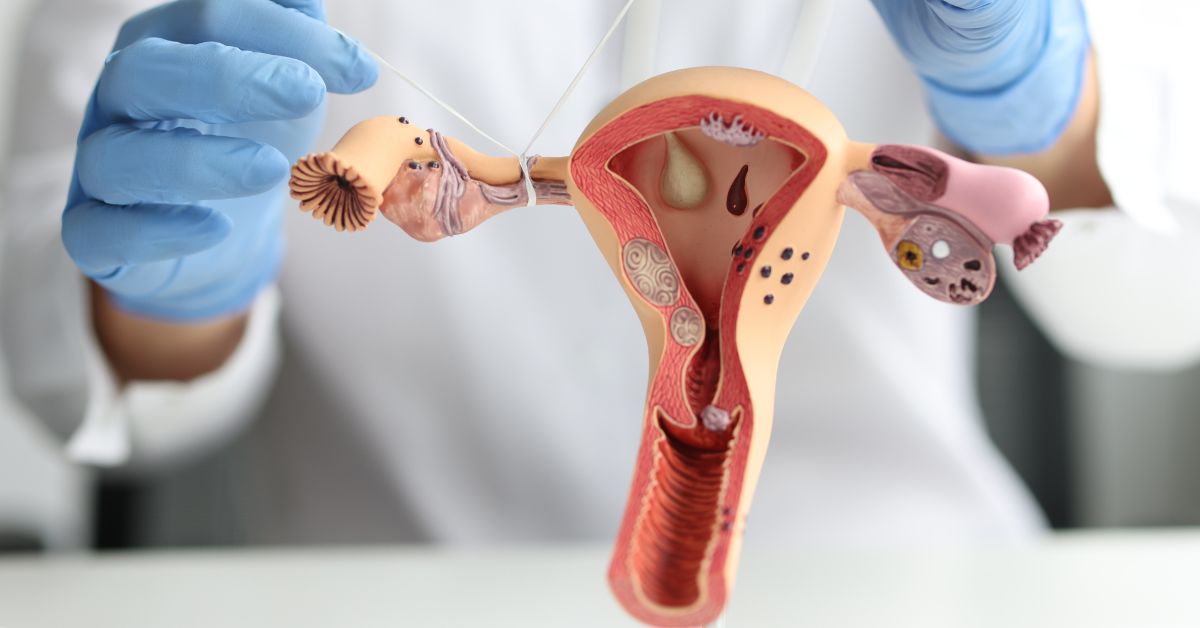
Tubal ligation is a surgical procedure that permanently prevents pregnancy by blocking, cutting, sealing, or removing the fallopian tubes. When the tubes are closed, sperm can no longer reach the egg, and fertilization cannot occur (1).
There are several methods, including cutting and tying the tubes, using clips or rings, cauterization, or full removal of the fallopian tubes (called salpingectomy). In the United States, complete or partial salpingectomy has become increasingly common, particularly during C-sections or other abdominal surgeries, due in part to evidence suggesting it may reduce endometrial and ovarian cancer risk (2,3).
To learn more about C-Section recovery, read this article: A Holistic Approach To Healing After C-Section
Does Tubal Ligation Affect Hormones?
While most research indicates that tubal ligation does not alter hormone production for most women (4), some studies suggest this may not be true for everyone. For example, one small observational study proposed that in a subset of cases, changes in ovarian blood flow following tubal ligation could be associated with lower estrogen levels and subsequent menstrual changes (5).
Overall, the conventional medical consensus is that tubal ligation does not directly affect ovarian hormone production because the ovaries are left intact and their blood supply is largely preserved. Estrogen, progesterone, and testosterone production continues, ovulation still occurs, and for many women, menstrual cycles remain largely unchanged.
That said, biology is rarely one-size-fits-all. Reviews of the literature suggest that while the majority of women do not experience menstrual changes after tubal sterilization, a consistent minority report changes such as heavier, more painful, or irregular cycles (6), with risk potentially influenced by surgical technique and individual physiology.
If you’re noticing hormonal changes, we have several articles that might be helpful:
Possible Changes Some Women Report Post Tubal Ligation
While many women feel well after tubal ligation, some report changes in the months or years that follow (6). These may include heavier or more painful periods, shorter or more irregular cycles, increased PMS symptoms, pelvic discomfort, or changes in mood or libido.
It’s important to note that many of these symptoms are also common with aging, postpartum changes, perimenopause, stress, and nutrient depletion. Because of this, it’s important to work with a knowledgeable healthcare provider to evaluate individual symptoms, consider the broader hormonal and metabolic context, and determine the most appropriate next steps for care.
From an integrative perspective, we recognize that the reproductive system functions as a connected network. Blood flow, nerve signaling, inflammatory responses, and pelvic anatomy all play roles in how hormones are produced, delivered, and cleared. For some women, particularly those already navigating hormonal or inflammatory challenges, surgical changes in the pelvis may be one of many contributing factors influencing how they feel.
You may come across the term Post-Tubal Ligation Syndrome (PTLS) (6). While this term is not (yet) formally recognized as a medical condition in mainstream medicine, it is used to describe the changes sometimes noticed after tubal ligation, such as shifts in menstrual patterns, pelvic discomfort, or changes in overall well-being.
The Potential Benefits & Risks of Tubal Ligation
As with all medical procedures, tubal ligation comes with both potential benefits and risks. Informed consent means understanding the full picture.
Potential Benefits of Tubal Ligation
For many women, tubal ligation offers meaningful advantages. It is one of the most effective forms of permanent birth control, eliminating the need for daily pills, implanted devices, or ongoing hormone exposure. This can be especially beneficial for women who experience side effects from hormonal contraception or who have medical reasons to avoid pregnancy.
When performed as a salpingectomy (removal of the fallopian tubes), tubal ligation may also reduce the risk of endometrial and epithelial ovarian cancer, a benefit increasingly considered in gynecologic care (2,3).
For women who feel confident that their families are complete, tubal ligation can provide peace of mind, bodily autonomy, and long-term reproductive certainty without the mental load of ongoing contraception management.
If you’re currently using hormonal contraception (or have in the past), this article might be interesting to you: Nutrient Depletion & The Birth Control Pill
Potential Risks and Considerations of Tubal Ligation
Tubal ligation is a surgical procedure, and like any surgery, it carries risks related to anesthesia, infection, bleeding, and recovery, though serious complications are uncommon (7).
Some women experience changes in their menstrual cycles following the procedure, such as heavier bleeding or increased cramping (6).
Tubal ligation is considered a highly effective form of permanent contraception, with a failure rate of approximately 0.5-1% over a woman’s lifetime. While rare, pregnancies can still occur, and when they do, there is an increased risk that the pregnancy will be ectopic (8).
Because tubal ligation is considered permanent, regret is an important consideration, particularly for women who undergo the procedure at a young age or during emotionally or physically vulnerable periods, such as immediately postpartum. While reversal procedures exist, they are not always successful.
Finally, tubal ligation does not protect against sexually transmitted infections, and it does not address underlying menstrual or hormonal concerns that may have been masked by prior hormonal contraception.
Is Tubal Ligation Reversible?
Tubal ligation is generally intended to be a permanent form of birth control. In some cases, surgical reversal may be an option, but these procedures are complex, can be costly, and success rates vary depending on factors such as age, overall health, and the method originally used (9).
For some women, pregnancy may still be possible through in vitro fertilization (IVF), even without reversal, though this also comes with medical, emotional, and financial considerations (10).
Because outcomes cannot be guaranteed, tubal ligation is best approached as a permanent decision.

Tubal Ligation Alternatives
For women seeking long-term pregnancy prevention, there are several alternatives that may be worth exploring, depending on health history, life stage, and personal preferences.
Hormonal birth control methods, such as oral contraceptives, hormonal IUDs, implants, and injections, can be highly effective at preventing pregnancy and may offer additional benefits for some women, such as cycle regulation or reduced menstrual pain (11). However, they may also come with trade-offs, including hormonal side effects, changes in mood or libido, and the need for ongoing use or medical follow-up.
Fertility awareness–based methods, when properly taught and consistently followed, can be highly effective and provide valuable insight into ovulation, cycle patterns, and overall reproductive health (11). These methods require education and daily engagement but appeal to women who prefer a non-hormonal, body-aware approach.
Barrier methods, such as condoms, offer pregnancy prevention without altering hormones and provide protection against sexually transmitted infections (11). Partner-based sterilization, such as vasectomy, is another highly effective permanent option that avoids direct impact on the female reproductive system and is generally less invasive than female sterilization (12).
Each option comes with its own benefits and limitations, and what feels like the right choice can change over time. Thoughtful discussion with a trusted healthcare provider can help ensure the method chosen aligns with both current needs and long-term goals.
Supporting Hormonal Health After Tubal Ligation
If you’ve already had a tubal ligation and notice changes in how you feel, supportive care is still very much possible. Hormonal health is influenced by many factors, including nutrient status.
Supporting optimal iron status, thyroid function, ovulatory patterns, stress response, and healthy inflammatory balance can offer meaningful support for overall hormonal health. Thoughtful nutrition, targeted supplementation, and gentle nervous system support can all work together to promote balance and long-term well-being.
Summary
Tubal ligation is a common and highly effective form of permanent birth control that works by preventing the egg and sperm from meeting. For most women, it does not directly affect hormone production, and large studies show that the majority tolerate the procedure well with stable cycles and symptoms over time.
At the same time, individual experiences do vary. Some women notice changes in menstrual patterns, while others feel relief in being able to stop hormonal contraception and gain long-term reproductive certainty. Even though current research does not support a clearly defined post-tubal syndrome, the symptoms women report are real and deserve to be taken seriously, evaluated thoughtfully, and supported.
Like any medical decision, tubal ligation comes with both benefits and considerations. Understanding its permanence, potential alternatives, and how it fits into one’s long-term goals is essential for informed consent. For women who have already undergone the procedure, supportive care focused on hormonal balance, inflammation, and overall well-being can help promote resilience and long-term health.
References:
- Marino S, Canela CD, Jenkins SM, Nama N. Tubal Sterilization. 2024 Feb 16. In: StatPearls [Internet]. Treasure Island (FL): StatPearls Publishing; 2025 Jan–. PMID: 29262077.
- Loghmani L, Saedi N, Omani-Samani R, Safiri S, Sepidarkish M, Maroufizadeh S, Esmailzadeh A, Shokrpour M, Khedmati Morasae E, Almasi-Hashiani A. Tubal ligation and endometrial Cancer risk: a global systematic review and meta-analysis. BMC Cancer. 2019 Oct 11;19(1):942. doi: 10.1186/s12885-019-6174-3. PMID: 31604465; PMCID: PMC6788032.
- Mor‐Hadar, D., Wilailak, S., Berek, J., & McNally, O. M. (2024). FIGO position statement on opportunistic salpingectomy as an ovarian cancer prevention strategy. International Journal of Gynecology & Obstetrics. https://doi.org/10.1002/ijgo.15884
- Gentile GP, Helbig DW, Zacur H, Park T, Lee YJ, Westhoff CL. Hormone levels before and after tubal sterilization. Contraception. 2006 May;73(5):507-11. doi: 10.1016/j.contraception.2005.12.002. Epub 2006 Feb 23. PMID: 16627035.
- Cattanach J. Oestrogen deficiency after tubal ligation. Lancet. 1985 Apr 13;1(8433):847-9. doi: 10.1016/s0140-6736(85)92209-3. PMID: 2858712.
- Lethbridge DJ. Post-tubal sterilization syndrome. Image J Nurs Sch. 1992 Spring;24(1):15-8. doi: 10.1111/j.1547-5069.1992.tb00693.x. PMID: 1541464.
- Børdahl PE, Solberg M, Langengen H. Complications and short-term consequences of tubal sterilization. A personal three- and twelve-month follow-up investigation. Acta Obstet Gynecol Scand. 1984;63(6):481-6. doi: 10.3109/00016348409156707. PMID: 6507049.
- Tulandi T. Tubal sterilization. N Engl J Med. 1997 Mar 13;336(11):796-7. doi: 10.1056/NEJM199703133361110. PMID: 9052660.
- Siegler AM, Hulka J, Peretz A. Reversibility of female sterilization. Fertil Steril. 1985 Apr;43(4):499-510. doi: 10.1016/s0015-0282(16)48488-8. PMID: 3157603.
- Malacova E, Kemp A, Hart R, Jama-Alol K, Preen DB. Effectiveness of in vitro fertilization in women with previous tubal sterilization. Contraception. 2015 Mar;91(3):240-4. doi: 10.1016/j.contraception.2014.12.001. Epub 2014 Dec 12. PMID: 25499586.
- Mansour, D., Inki, P., & Gemzell-Danielsson, K. (2010). Efficacy of contraceptive methods: a review of the literature. The European Journal of Contraception & Reproductive Health Care: The Official Journal of the European Society of Contraception, 15 Suppl 2, S19-31. https://doi.org/10.3109/13625187.2010.532999
- Schwingl PJ, Guess HA. Safety and effectiveness of vasectomy. Fertil Steril. 2000 May;73(5):923-36. doi: 10.1016/s0015-0282(00)00482-9. PMID: 10785217.