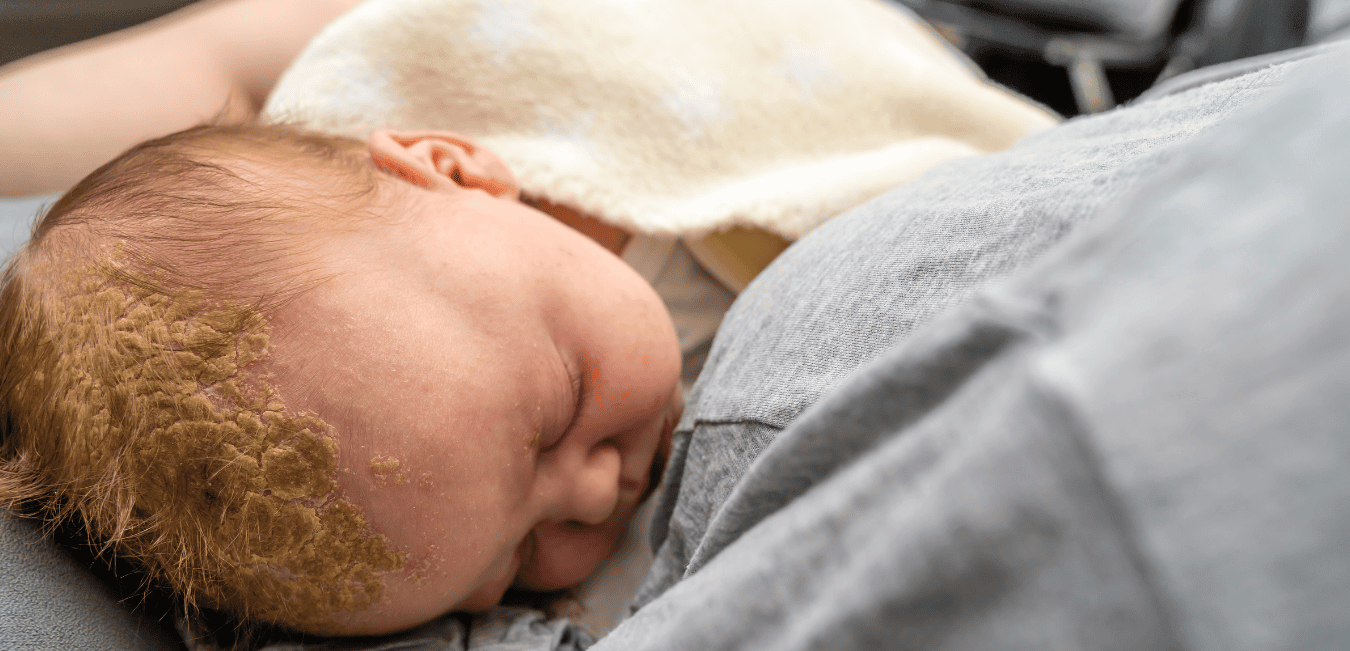
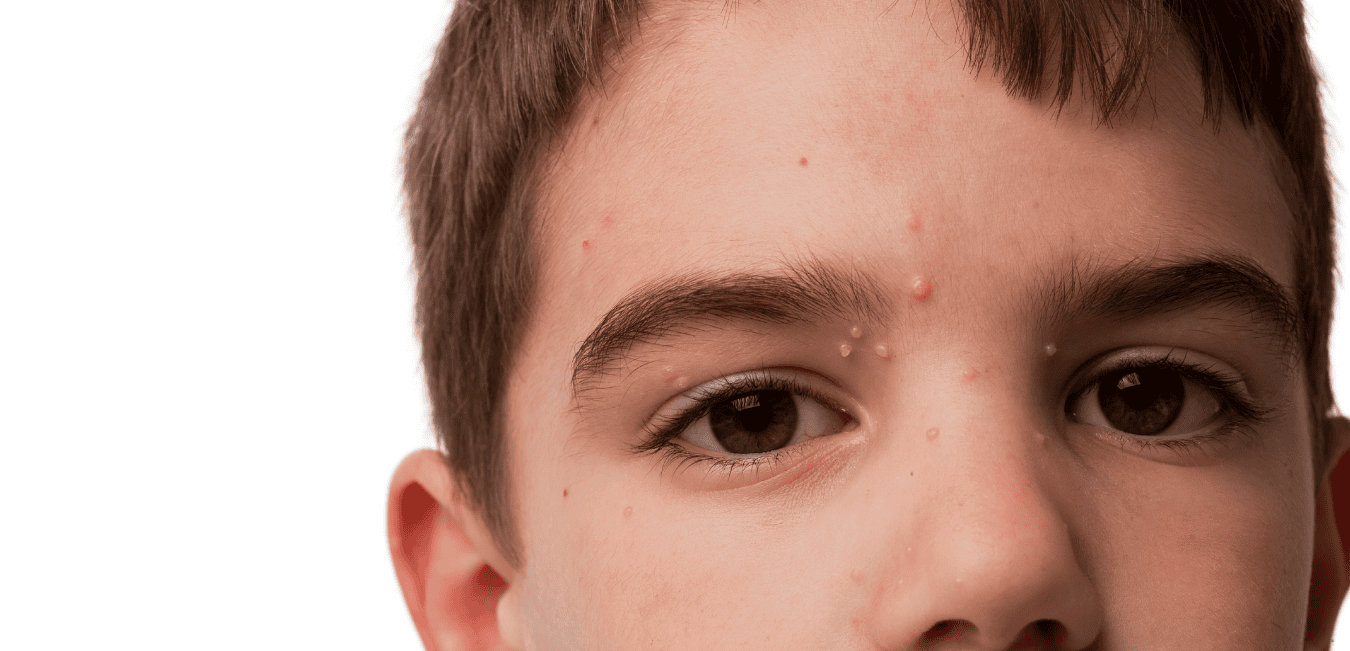
Impetigo is a common bacterial skin infection in children, particularly in infants, toddlers, and early school-aged kids. It tends to show up around the nose and mouth, but it can appear anywhere the skin barrier has been disrupted. While impetigo often looks alarming, it is usually superficial and treatable when addressed early.
Because impetigo spreads easily in homes, schools, and daycare settings, understanding what it is, how it develops, and how to support healing can help prevent ongoing spread and repeated infections.
What Is Impetigo?
Impetigo is a superficial bacterial infection of the skin, meaning it affects the outermost layers rather than deeper tissue. It is most commonly caused by Staphylococcus aureus or Streptococcus pyogenes bacteria (1).
These bacteria commonly live on the skin and inside the nose without causing problems. Impetigo develops when they gain access through broken or irritated skin, such as:
- Scratches or cuts
- Bug bites
- Eczema or dry, cracked skin
- Skin irritation from frequent nose wiping during colds or allergies
Impetigo is most common in warm, humid conditions and in settings where children have close physical contact.
What Does Impetigo Look Like?
Impetigo often starts subtly and progresses over several days.
Early signs may include:
- Small red spots or bumps
- Tiny blisters or sores
As impetigo continues to develop, these areas may:
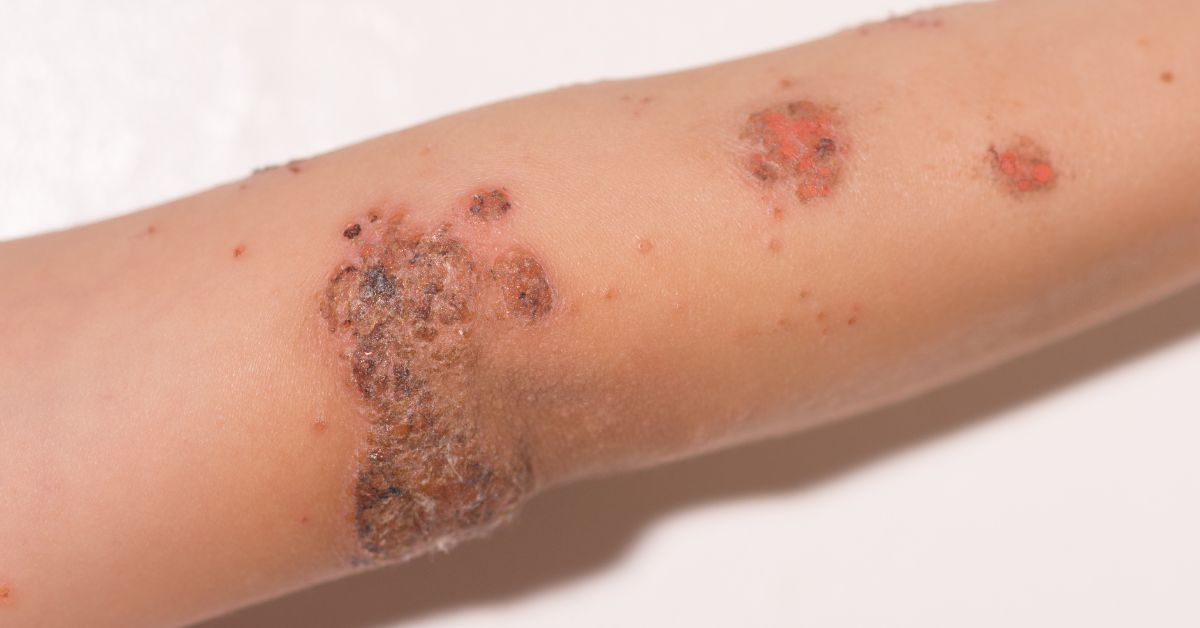
- Ooze clear or yellow fluid
- Form yellow or honey-colored crusts
- Spread outward, especially if scratched
Some children experience mild itching or tenderness. Fever and systemic symptoms are uncommon but can occur in more extensive cases (and this is a reason to call your doctor!).
The most common locations where impetigo tends to occur include:
- Around the nose and mouth
- Inside the nostril
- Hands and arms
- Legs
- Areas already irritated by eczema or friction
Types of Impetigo
Impetigo occurs in two main forms (1).
Non-bullous impetigo
This is the most common form. It produces the classic yellow or honey-colored crusts and most often appears around the nose and mouth.
Bullous impetigo
This form causes larger, fluid-filled blisters that may rupture and leave raw skin underneath. It is more common in infants and young children and tends to spread more quickly.
How Impetigo Spreads
Impetigo is highly contagious and spreads easily (1) through:
- Direct skin-to-skin contact
- Scratching and touching other areas of the body
- Shared towels, bedding, clothing, or toys
Because the bacteria can live on surfaces and under fingernails, impetigo often spreads rapidly among siblings or classmates if not managed promptly.
Can Impetigo Go Away On Its Own? How Is Impetigo Treated?
In some very mild cases, impetigo may improve on its own as the immune system clears the infection. However, because impetigo is highly contagious and can spread quickly (both to other areas of your child’s body and to other people), antibiotic treatment is usually recommended (2).
Without treatment, impetigo may persist for weeks, spread to new areas of skin, recur repeatedly, or increase the risk of complications or secondary infections. For these reasons, most healthcare providers recommend treating impetigo rather than waiting it out.
Antibiotic Treatment for Impetigo
For mild or localized impetigo, conventional treatment often includes prescription topical antibiotic ointments applied directly to the affected skin. When impetigo is more extensive, involves multiple areas, or keeps recurring, treatment may include oral antibiotics (2).
When antibiotics are used, most children improve quickly and are no longer contagious within 24-48 hours (2).
To learn more about recovering from antibiotic use, read this article: Restoring Gut Health After Antibiotics: A Guide For Families
Supporting Healing From Impetigo At Home
Supportive care should happen alongside antibiotic treatment and includes gently cleansing affected areas 1-2 times daily with warm water and mild fragrance-free soap, followed by careful pat-drying. Crusts should not be picked or aggressively scrubbed, as this can spread bacteria and delay healing. Keeping fingernails trimmed short and hands clean helps reduce spread to other areas of the body.
Some families choose to use colloidal silver topically as part of supportive skin care while the skin barrier is healing. Silver has been widely researched for its effects on microbial balance, and research suggests topical silver formulations may help reduce bacterial burden in superficial skin infections (3).
In addition, wash towels, bedding, washcloths, and clothing that touches affected skin in hot water, and avoid sharing personal items until the infection has cleared.
Herbs Studied in Relation to Staph
Several medicinal plants have been studied in laboratory settings for how they interact with streptococcal bacteria and/or for how they support immune signaling and lymphatic response, potentially helping the body recognize and respond to bacterial exposure.
To learn more, read this article: Winter Immune Support For All Ages
Skin Barrier, Microbiome, and Whole-Body Support
Healthy skin relies not only on surface care, but also on a well-functioning skin barrier and a balanced skin microbiome. When the skin barrier is compromised – whether from eczema, frequent irritation, or repeated infections – the skin’s natural ecosystem can become disrupted, making it harder for the skin to recover fully.
Emerging research highlights the importance of supporting the skin’s microbial balance as part of overall skin resilience, particularly in inflammatory or recurrent skin conditions (4). The skin microbiome plays an active role in barrier integrity and communication between skin cells. When this balance is supported, the skin is better able to regulate inflammation, maintain hydration, and recover from stressors.
Probiotics are increasingly studied for their role in supporting a healthy skin environment by interacting with the skin’s surface and influencing microbial balance (4).
To learn more, read this article: The Vast Health Benefits of Probiotics
When to See a Doctor About Impetigo
Medical care is important for most cases of impetigo because treatment often includes topical antibiotic ointments, and more widespread infections may require oral antibiotics. Early treatment shortens the course of illness and reduces contagiousness.
It is especially important to contact your healthcare provider if:
- The rash is spreading quickly
- Multiple areas are affected
- There is fever or your child seems unwell
- The sores are painful or worsening
- The infection does not improve within a few days
- Impetigo keeps recurring
Preventing Impetigo (And Why Some Children Get Recurrent Impetigo)
Impetigo is more likely to develop when the skin’s protective barrier is compromised. Small breaks in the skin, such as scrapes, eczema patches, insect bites, or irritated areas around the nose and mouth, can create an entry point for bacteria that normally live on the skin.
Because of this, one of the most important factors in prevention is supporting healthy, intact skin through gentle cleansing, moisturizing, and addressing ongoing irritation promptly.
When impetigo keeps coming back, it may be a sign of persistent skin barrier disruption, the need for microbiome support, and/or underlying immune stress, rather than repeated exposure alone. In these cases, looking beyond surface hygiene and supporting overall skin and immune resilience can be an important part of reducing recurrence.
Summary
Impetigo is a common contagious bacterial skin infection that primarily affects young children. It typically appears as red sores that develop yellow, honey-colored crusts and spreads easily through contact. Early treatment, good hygiene, and skin barrier support help shorten recovery and prevent spread. While impetigo can look concerning, it is usually superficial and treatable with proper care.
References:
- Hartman-Adams H, Banvard C, Juckett G. Impetigo: diagnosis and treatment. Am Fam Physician. 2014 Aug 15;90(4):229-35. PMID: 25250996.
- CDC. (2024, April 18). About Impetigo. Group a Strep Infection. https://www.cdc.gov/group-a-strep/about/impetigo.html
- Goggin R, Jardeleza C, Wormald PJ, Vreugde S. Colloidal silver: a novel treatment for Staphylococcus aureus biofilms? Int Forum Allergy Rhinol. 2014 Mar;4(3):171-5. doi: 10.1002/alr.21259. Epub 2014 Jan 15. PMID: 24431107.
- Rawal S, Ali SA. Probiotics and postbiotics play a role in maintaining dermal health. Food Funct. 2023 May 11;14(9):3966-3981. doi: 10.1039/d3fo00152k. PMID: 37051640.