Most parents will encounter hives at least once, and it can be alarming to watch your child suddenly break out in raised, red, itchy patches of skin. Hives often appear out of nowhere, move around the body, and sometimes vanish as quickly as they come. While they’re usually harmless and temporary, understanding why they happen and what to do when they show up can help you stay calm and confident.
This guide will walk you through what hives are, why they appear, how to support your child at home, and when medical evaluation is important. We’ll also talk about recurrent hives, which are more common than many parents realize.
What Are Hives?
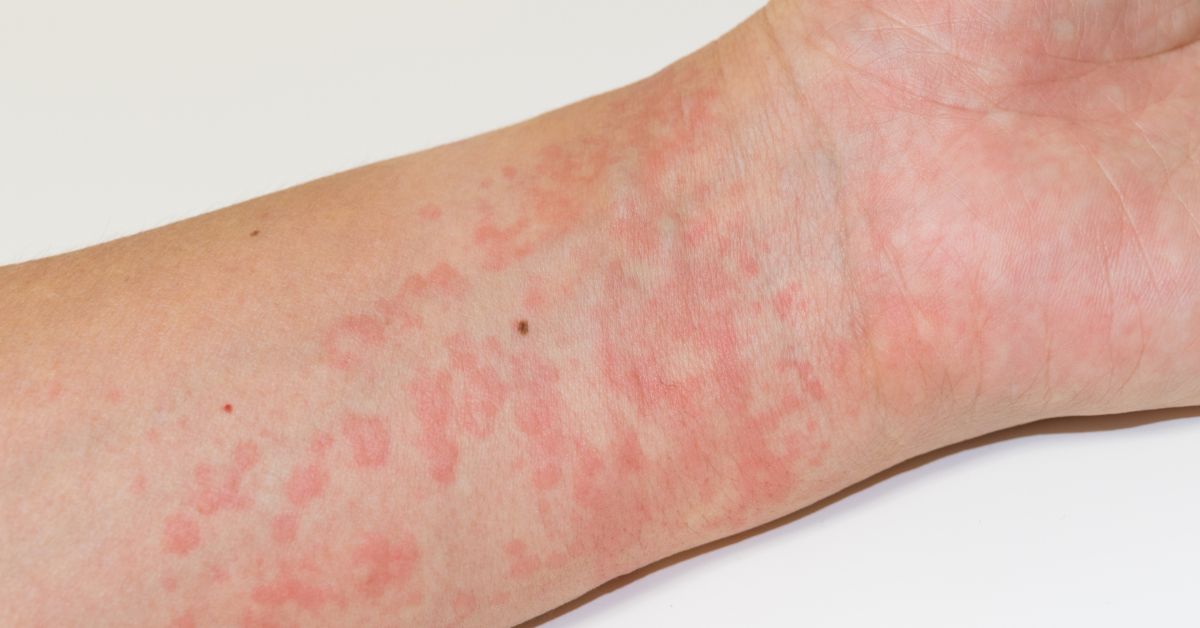
Hives (also called urticaria) are a skin reaction caused by the immune system releasing histamine into the skin. Histamine makes the small blood vessels leak fluid, which causes raised, smooth, itchy welts (1). These welts can look like mosquito bites, patches, blotches, or rings. They may be small and scattered or form large, merging areas called “plaques.”
Two key features help identify hives:
They move and change: A spot that appears on your child’s arm might fade within an hour and reappear on the belly. Individual hives typically last less than 24 hours in one location.
They’re itchy: Hives almost always itch, although the intensity varies.
Hives themselves are not contagious. They are a visible expression of inflammation happening in the skin.
Common Causes of Hives
In many cases, especially in children, hives are triggered by something the immune system perceives as irritating or unfamiliar. Sometimes the trigger is obvious; often it’s not.
Most hives are caused by a viral infection. In fact, it is estimated that less than 10% are caused by allergic reactions to a food, a drug, or an insect bite. Even mild, everyday viruses like those that cause colds can trigger them.
Other potential triggers include (2,3):
- Foods (especially nuts, eggs, shellfish, dairy, strawberries, and food dyes)
- Medications
- Insect bites or stings
- Temperature shifts (heat, cold, sweating)
- Pressure or friction on the skin
- Environmental allergens (pollen, pet dander, etc.)
- Bacterial infections
Many times, the cause is never definitively identified, especially when hives occur in the setting of a viral infection.
When to Call a Doctor About Hives
Most hives are mild and go away on their own within hours to a few days. But sometimes hives can be part of a more serious reaction. Trust your intuition, if something feels off, it’s always appropriate to seek medical guidance.
Contact a doctor promptly if:
- Hives are accompanied by any of the following: difficulty breathing, wheezing, persistent cough, swelling of the lips, tongue, or throat, vomiting, or your child seems faint or confused. These may be signs of anaphylaxis, a medical emergency.
- Hives that last longer than 24 hours in the same spot, leave bruising, or are painful instead of itchy. These features are not typical of simple hives and may require evaluation.
- Fever with hives and a very ill-appearing child. Although fever and hives are common with viral illness, a doctor should assess if your child seems unusually unwell.
- Hives lasting longer than 6 weeks. This is considered chronic urticaria and warrants medical evaluation.
- Hives in a baby under 6 months old (not necessarily an emergency, but worth discussing with a pediatrician).
If at any point you are unsure, trust your gut and reach out.
How to Support Your Child with Hives at Home
When hives are not part of a severe allergic reaction, comfort care can make a big difference. The goal is to soothe the skin, reduce itch, and support the body’s natural inflammatory response.
- Cool compresses: A soft, cool cloth placed on the itchy areas helps calm irritation and reduce redness.
- Lukewarm baths: Hot water can aggravate hives. A gentle, lukewarm bath is soothing, especially if your child is uncomfortable.
- Minimize irritation: Loose cotton clothing is best. Avoid scratching, harsh soaps, or very hot showers.
- Hydration and rest: If the hives are part of a viral illness, supporting the immune system with rest, fluids, and nourishing foods often reduces symptoms more quickly.
- Topical soothing support: Parents often find relief with gentle preparations formulated for irritated skin.
- Herbal Support: Some children benefit from herbs traditionally used to support a healthy histamine response and calm the body’s reactivity. Botanicals such as nettle leaf, eyebright, and yerba santa have long histories of use when a child seems extra reactive to their environment or is experiencing heightened histamine sensitivity.
If your child is truly uncomfortable, talk with your pediatrician about whether short-term symptom relief (such as antihistamines) is appropriate.

Understanding Recurrent Hives in Children
Recurrent hives are episodes of hives that come and go for weeks or months. Most of the time, recurrent hives are still benign. In children, they are often linked to the immune system reacting to viral infections, gut irritation, or environmental triggers (4).
Recurrent hives do not automatically mean a food allergy. True allergic hives usually appear within minutes to two hours after a trigger and resolve when the trigger is removed.
Possible contributors to recurrent hives include:
- Frequent viral infections
- Stress or strong emotions
- Increased histamine load due to gut irritation or certain foods
- Environmental allergens
If hives come back often or persist beyond six weeks, a doctor may recommend allergy testing, checking for underlying inflammation, or evaluating how the immune system is functioning.
If your child has recurrent hives, it may be helpful to keep a simple log: when they happen, what your child ate, any new products used, illnesses, weather exposure, and emotional stressors should all be tracked.
This record can be very useful for your provider. In the integrative world, ongoing support often focuses on:
- Understanding patterns
- Supporting gut health and the skin barrier
- Managing histamine load
- Reducing unnecessary irritants
- Strengthening immune resilience
Recurrent hives can be both emotionally and physically draining, but with the right tools and support, most children do very well.
Summary
Hives in children are common, usually harmless, and most often triggered by viral infections rather than food allergies. They show up as itchy, raised welts that move around the body and typically disappear within hours to days. Support at home focuses on soothing the skin and reducing irritation – think cool compresses, lukewarm baths, loose clothing, rest, hydration, and gentle topical or herbal support. Call a doctor if hives come with trouble breathing, swelling of the lips or tongue, vomiting, faintness, fever with a very ill appearance, bruising or pain, or if they last more than 24 hours in one spot or come and go for longer than six weeks.
References:
- Kolkhir P, Giménez-Arnau AM, Kulthanan K, Peter J, Metz M, Maurer M. Urticaria. Nat Rev Dis Primers. 2022 Sep 15;8(1):61. doi: 10.1038/s41572-022-00389-z. PMID: 36109590.
- Texas Children’s. (2023). Hives, hives and more hives! Www.texaschildrens.org. https://www.texaschildrens.org/content/wellness/hives-hives-and-more-hives
- Kayiran MA, Akdeniz N. Diagnosis and treatment of urticaria in primary care. North Clin Istanb. 2019 Feb 14;6(1):93-99. doi: 10.14744/nci.2018.75010. PMID: 31180381; PMCID: PMC6526977.
- Chin ML. It Comes and Goes: Pediatric Chronic Spontaneous Urticaria. Cureus. 2023 Jun 5;15(6):e40006. doi: 10.7759/cureus.40006. PMID: 37416011; PMCID: PMC10322213.