Plantar warts are a common viral skin condition that appear on the bottoms of the feet. They can be uncomfortable, contagious, and stubborn to get rid of.
In this article, we’ll cover what plantar warts are, what causes them, and both natural and conventional treatment options to help you and your family find relief.
What Are Plantar Warts?
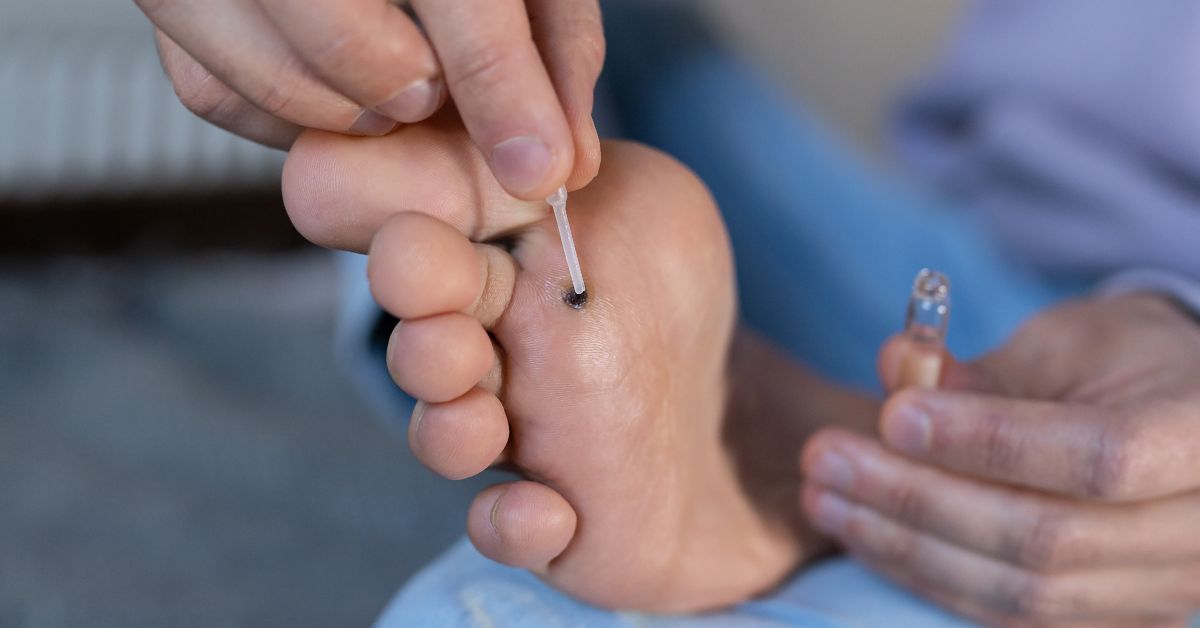
Plantar warts are small, rough, grainy growths that usually appear on the soles of the feet, especially in weight-bearing areas like the heel or ball. They are caused by infection with the human papillomavirus (HPV) (1), which enters the skin through tiny breaks or cuts.
Plantar warts may have small black dots inside them (tiny, clotted blood vessels) and can grow inward because of pressure from walking or standing. This makes them more uncomfortable than warts that grow outward.
Plantar warts are especially common in children, teens, and in people with weakened immune systems. They spread easily through direct skin-to-skin contact or indirectly from contaminated surfaces (2), like locker room floors, shared showers, or pool decks.
While generally harmless, plantar warts can last months to years if untreated. Families often choose treatment to reduce pain, speed healing, prevent spreading to others, or address cosmetic concerns.
Topical Home Care for Plantar Warts
Natural topical remedies are often the first treatment families try at home. The aim is to soften the thickened skin, gently stimulate the body’s immune response, and apply natural substances that may help the body fight the underlying virus.
- Watchful Waiting (Doing Nothing): Sometimes the best approach is simply patience. Many plantar warts go away on their own within 1–2 years as the immune system eventually clears the virus. Families may choose this route if the wart isn’t painful or spreading, especially in younger children.
- Apple Cider Vinegar (ACV): A cotton ball soaked in ACV and taped to the wart overnight is one of the most popular home remedies. The acidic nature helps soften the skin and break down wart tissue. Please do keep a watchful eye for pain or irritation, as apple cider vinegar can be too irritating for some people, especially children. Stop use if irritation or pain occurs.
- Essential Oils: Tea tree, oregano, and thuja oils are most commonly used for their potential antiviral and skin-supportive effects. They should always be diluted before application to avoid skin irritation. If stinging or burning occurs, rinse the area off immediately.
- Black Seed Oil (Nigella sativa): Black seed oil has been traditionally valued for its wide range of wellness benefits. It contains naturally occurring compounds, such as thymoquinone, that have been studied for their role in maintaining microbial balance and supporting healthy immune function. When applied topically, it may help create an environment that makes it harder for unwanted skin growths to thrive (2,3).
- Salicylic Acid: One of the most widely available over-the-counter options. Salicylic acid works by gently peeling away layers of thickened skin and by irritating the wart, which can help prompt the immune system to recognize and fight the underlying virus (4).
- Found in medicated pads, gels, and liquids (typically 17–40%).
- Often more effective if the wart is softened first with warm water and gently filed with a pumice stone.
- Covering the treated wart with a bandage or tape may improve results.
- Not recommended for use on the face, neck, or genitals.
- Duct Tape Occlusion Therapy: Surprisingly effective, and backed by research, duct tape deprives the wart of oxygen and may stimulate an immune reaction. The wart is usually covered for several days, then gently filed before repeating (5).
Whichever topical method you choose, consistency is key. Most need to be applied daily for several weeks or even months before results are seen. If significant irritation, swelling, drainage, or worsening pain develops, it’s best to discontinue use and check in with a healthcare provider.
Internal Support for Plantar Warts
Because warts are caused by a virus, immune strength likely plays a role in whether they persist or resolve quickly. Internal support helps the body recognize and fight off HPV.
- Zinc: Research shows zinc deficiency may make warts more persistent, and supplementation has been effective in some studies (6). Zinc can be taken as a supplement or increased through foods like pumpkin seeds, grass-fed beef, and lentils.
- Vitamin A: Essential for skin cell turnover and antiviral defense. Cod liver oil is a great way to increase intake.
- Vitamin C: A classic immune supporter, vitamin C helps white blood cells respond effectively to viral infections (7).
- Vitamin D: Research has found an association between low vitamin D status and a greater risk of persistent warts (8).
- Immune Supporting Herbs: Elderberry, echinacea, and astragalus are gentle but powerful allies for supporting a child’s immune system.
Homeopathy for Plantar Warts
Homeopathy has been used traditionally for wart removal. Some of the most common remedies include:
- Thuja occidentalis: A popular homeopathic remedy for warts, especially plantar or mosaic types.
- Causticum: Considered when warts are painful, recur frequently, or are resistant to other treatments.
- Antimonium crudum: Sometimes recommended for warts on the soles of the feet that are hard and thick.
Most often, a 30C potency is used once or twice daily, though frequency and potency may vary depending on the case.
To learn more about homeopathy, read this article: How To Create A Family Homeopathy Kit
Lifestyle & Prevention
Because plantar warts spread so easily, prevention and good hygiene are just as important as treatment.
- Wear shoes or flip-flops in public places like locker rooms, showers, and pool areas.
- Keep feet dry and change socks daily to prevent moisture buildup.
- Do not pick at warts, as this can spread the virus to other parts of the foot or to others.
- Wash hands after touching the affected area.
- Support the immune system through healthy meals, outdoor play, good hydration, restful sleep, and stress management.

Conventional Options for Plantar Wart Treatment
If natural methods don’t resolve the wart, or if it becomes painful, starts spreading, or interferes with daily life, there are additional treatment options available that a doctor can help guide you through:
- Cryotherapy (Freezing): Liquid nitrogen is applied directly to the wart, causing the tissue to blister and eventually fall off. This often requires several sessions spaced a few weeks apart. The treatment can be uncomfortable, with many describing the sensation as a sharp stinging or burning feeling during and shortly after the procedure.
- Cantharidin (“Beetle Juice”): A blistering agent painted onto the wart by a clinician. After application, the wart usually blisters and peels away within a few days. This treatment is typically painless at the time of application but may cause some soreness as the blister forms.
- Cantharidin is a naturally occurring substance derived from blister beetles. On its own, it can be toxic if swallowed or absorbed in large amounts, which is why it is not available for over-the-counter use. When applied in a controlled, tiny amount by a trained clinician, it is considered safe and effective for wart treatment in both children and adults.
- Chemical Peels: Stronger acids like salicylic or trichloroacetic acid applied to dissolve wart tissue layer by layer.
- Laser Therapy: Lasers are used to destroy the tiny blood vessels feeding the wart, which cuts off its blood supply and causes it to shrink and die. Several sessions may be required. While effective for some, laser treatment can be painful during the procedure and may feel similar to a sharp snapping or burning sensation. Some soreness, swelling, or blistering can occur afterwards. Because of the discomfort and higher cost, this option is usually reserved for warts that have not responded to other treatments.
- Minor Surgery: The wart can be cut or burned away under local anesthesia. Because this carries a higher risk of scarring, it’s usually reserved for stubborn cases that haven’t responded to other treatments.
- Immunotherapy: Stimulates the immune system to recognize and attack the virus through topical or injected agents – typically only used in cases of multiple, very stubborn warts.
These treatments may require multiple applications and, even then, are not always effective.
When to See a Doctor About Plantar Warts
While most plantar warts can be managed naturally at home, medical evaluation may be needed if:
- The wart is very painful or interferes with walking.
- Warts are spreading rapidly.
- The wart looks unusual or changes in appearance.
- A patient has diabetes, neuropathy, or poor circulation (to prevent complications).
- Natural and at-home treatments haven’t worked for several months.
To learn more about common skin conditions, read these articles:
- All About Athlete’s Foot: Home Remedies & More
- Integrative Treatment For Keratosis Pilaris (aka Chicken Skin Rash)
- What Parents Need To Know About Steroid Creams For Eczema In Kids
- All About Ringworm: Causes, Remedies, & When to See a Doctor
Summary
Plantar warts are common contagious growths on the bottoms of the feet caused by HPV. While not dangerous, they can be uncomfortable and long-lasting. Natural treatments like apple cider vinegar, black seed oil, essential oils, and salicylic acid alternatives may help break them down, while immune support through zinc, vitamins, and herbs helps the body fight the virus from within. Homeopathy and lifestyle adjustments can also play a part.
Conventional options, such as cryotherapy or cantharidin, are available if warts are persistent or painful, though they might not always be effective.
References:
- Witchey DJ, Witchey NB, Roth-Kauffman MM, Kauffman MK. Plantar Warts: Epidemiology, Pathophysiology, and Clinical Management. J Am Osteopath Assoc. 2018 Feb 1;118(2):92-105. doi: 10.7556/jaoa.2018.024. PMID: 29379975.
- Nasiri N, Ilaghi Nezhad M, Sharififar F, Khazaneha M, Najafzadeh MJ, Mohamadi N. The Therapeutic Effects of Nigella sativa on Skin Disease: A Systematic Review and Meta-Analysis of Randomized Controlled Trials. Evid Based Complement Alternat Med. 2022 Dec 5;2022:7993579. doi: 10.1155/2022/7993579. PMID: 36518853; PMCID: PMC9744621.
- Witchey DJ, Witchey NB, Roth-Kauffman MM, Kauffman MK. Plantar Warts: Epidemiology, Pathophysiology, and Clinical Management. J Am Osteopath Assoc. 2018 Feb 1;118(2):92-105. doi: 10.7556/jaoa.2018.024. PMID: 29379975.
- Cockayne S, Hewitt C, Hicks K, Jayakody S, Kang’ombe AR, Stamuli E, Turner G, Thomas K, Curran M, Denby G, Hashmi F, McIntosh C, McLarnon N, Torgerson D, Watt I; EVerT Team. Cryotherapy versus salicylic acid for the treatment of plantar warts (verrucae): a randomised controlled trial. BMJ. 2011 Jun 7;342:d3271. doi: 10.1136/bmj.d3271. PMID: 21652750; PMCID: PMC3109952
- Focht DR 3rd, Spicer C, Fairchok MP. The efficacy of duct tape vs cryotherapy in the treatment of verruca vulgaris (the common wart). Arch Pediatr Adolesc Med. 2002 Oct;156(10):971-4. doi: 10.1001/archpedi.156.10.971. PMID: 12361440.
- Wang CC, Wang WX, Wu PY. Oral zinc sulphate reduces the recurrence rate and provides significant therapeutic effects for viral warts: A systematic review and meta-analysis of randomized controlled trials. PLoS One. 2025 May 7;20(5):e0323051. doi: 10.1371/journal.pone.0323051. PMID: 40334186; PMCID: PMC12058182.
- Hemilä H. Vitamin C and Infections. Nutrients. 2017 Mar 29;9(4):339. doi: 10.3390/nu9040339. PMID: 28353648; PMCID: PMC5409678.
- Cao Y, Zhou X, Yang H. Association of vitamin D with risk of warts: A retrospective and Mendelian randomization study. Skin Res Technol. 2024 Aug;30(8):e13911. doi: 10.1111/srt.13911. PMID: 39121007; PMCID: PMC11314362.