The internet is home to the full spectrum of “screen time” opinions. From “screens will rot your child’s brain” to “my toddler learned to read from YouTube.” The reality is that screens are part of modern life. This article is not here to shame anyone. It is here to share what the research actually says, so you can make informed decisions for your family.
In this article you’ll learn what the research shows about how screen time affects language development, sleep, and mental health in children; what factors seem to matter most; and what practical steps parents can take based on the evidence.
First: What Does “Screen Time” Even Mean?
One of the biggest problems with screen time research is that “screen time” is not a single thing. Watching an educational program with a parent is a fundamentally different experience from passively consuming fast-paced content on a tablet alone. Video calling a grandparent is different from scrolling on social media. Television playing in the background while kids play is different from focused interactive learning apps.
Much of the early screen time research lumped all of these experiences together, which made the findings both alarming and difficult to interpret. More recent research has started to pull apart what type of screen use, at what age, for how long, and with whom present matters most, and the picture that emerges is considerably more nuanced (1).
What the Research Says About Language Development & Screens
Language development is perhaps the area with the most robust research base on screen time.
A systematic review and meta-analysis published in JAMA Pediatrics, analyzed data from nearly 19,000 children across 42 studies and found that greater quantity of screen use was associated with lower language skills. However, the same analysis found that educational programming and co-viewing, meaning a parent or caregiver watching alongside the child and talking about what they see, were both associated with stronger language development (1).
This is a critical finding because the negative association between screen time and language development appears to be most pronounced when screen use displaces back-and-forth verbal interaction between a child and their caregiver, which is the primary driver of language acquisition in early childhood (1).
The research also consistently finds that earlier onset of screen use and longer daily duration are associated with weaker language outcomes, with the most sensitive period appearing to be under two years of age. This aligns with the American Academy of Pediatrics recommendation to avoid screen use before 18 months, with the exception of video chatting (2).
You might like this article, too: Nutrients That May Benefit Individuals With Autism

What the Research Says About Screens & Sleep
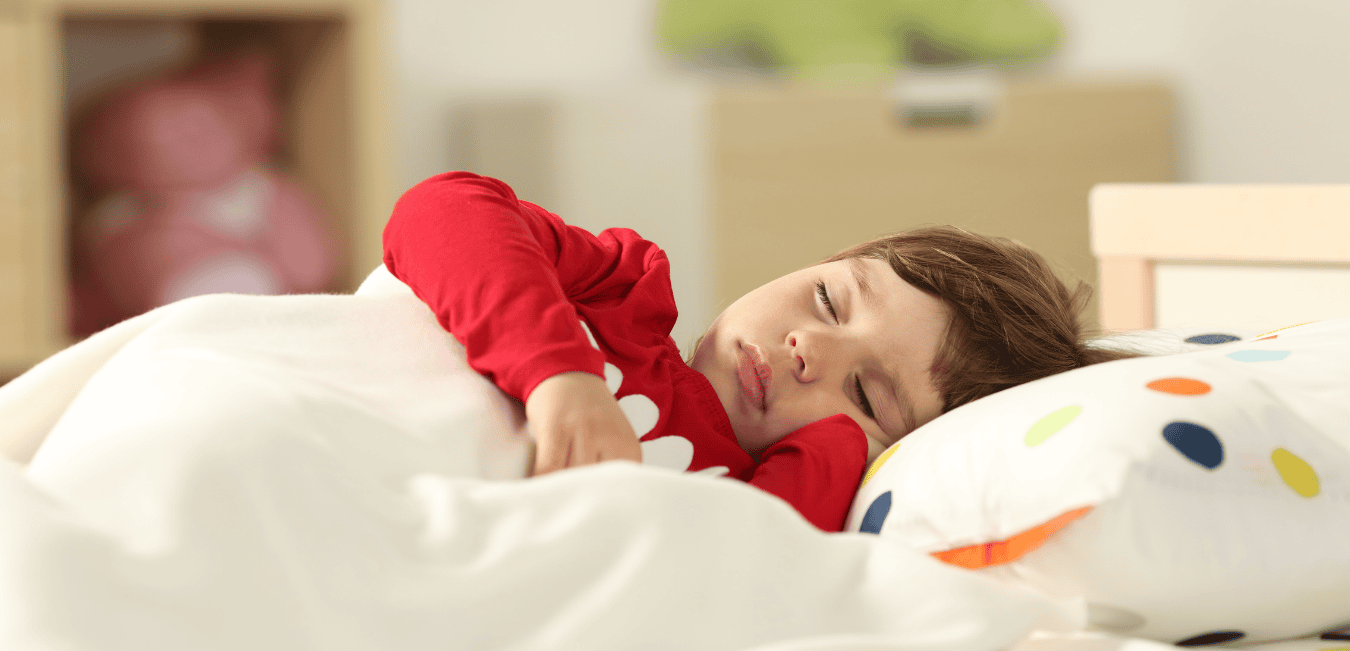
One of the clearest and most consistent findings in the screen time literature is this: evening screen use disrupts children’s sleep (3).
Blue light emitted by screens suppresses melatonin production, the hormone that governs sleep onset and circadian rhythm. Research has found that even low levels of evening light exposure can suppress melatonin significantly in children, with some studies reporting melatonin suppression of up to 70 to 99% depending on light intensity and exposure duration (3). Children appear to be more sensitive to this effect than adults.
The consequences of poor sleep extend well beyond tiredness. Sleep is critical for memory consolidation, emotional regulation, immune function, and cognitive performance. Research confirms that children who sleep less tend to perform worse academically, have more behavioral difficulties, and are at higher risk for mood problems (4).
You might like this article, too: Key Supplements For Infant & Child Brain Development
The practical implication here is probably the clearest takeaway from all of the screen time research: screens in the hour before bed, particularly those held close to the face like tablets and smartphones are detrimental to sleep (3).
To learn more about sleep in children, read this article: 9 Reasons Your Kids Aren’t Sleeping (And How To Help)
What the Research Says About Screens & Mental Health
The relationship between screen time and mental health in children is real, but again, it is not simple.
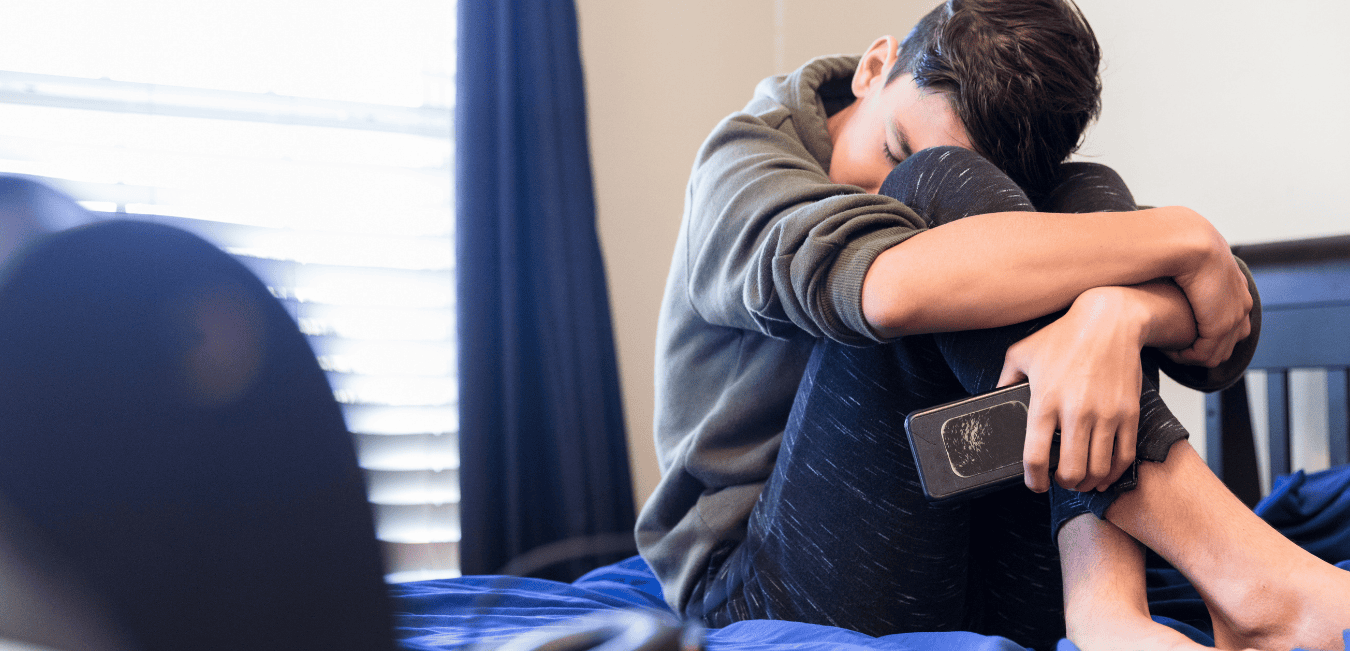
A systematic review and meta-analysis examining screen time and mental health outcomes in children during the COVID-19 pandemic found a significant association between increased screen time and higher rates of depression and anxiety symptoms in children and adolescents (5). Notably, the associations were stronger for social media use and passive consumption than for interactive or educational screen use.
For adolescents in particular, social media use is consistently associated with negative body image, social comparison, and increased risk of anxiety and depressive symptoms. The mechanisms here are fairly well understood: social media exposes adolescents to curated, idealized images, social comparison dynamics, and the stress of online social environments, all of which place pressure on a developmental stage that is already characterized by identity formation and heightened sensitivity to peer perception (5).
You might like this article, too: 6 Strategies To Support A Child Struggling With Anxiety
For younger children, the mental health effects of screen time appear to be more closely linked to displacement: when screen use displaces physical activity, outdoor play, face-to-face social interaction, and sleep, the downstream effects on mood and wellbeing are measurable. The screen itself is less the problem than what it is crowding out (2,6).

What the Research Says About the Content & Context of Screen Usage
Perhaps the most important nuance for parents to understand about screen time and kids is how much content and context moderate the effects of screen time.
The JAMA Pediatrics meta-analysis found that co-viewing was associated with positive language outcomes, not negative ones (1). Research on children in resource-limited settings similarly found that caregiver interaction during screen exposure was associated with a lower risk of cognitive and language delays and better socioemotional outcomes. Children exposed to educational content with an engaged caregiver consistently fared better than those watching any content alone (6).
Fast-paced, non-educational content, particularly when consumed passively and in large quantities, is most consistently associated with negative developmental outcomes. Slow-paced, language-rich, educational content watched with an engaged caregiver is associated with neutral to positive outcomes in children over two years of age.
What Screen Time Research Means for Families
Based on the research, here is what seems to matter most when it comes to screens and kids:
Age matters most for the youngest children. The under-two age group is where the evidence for limiting screen time is strongest. At this age, back-and-forth interaction with caregivers is the primary driver of language and cognitive development, and screens displace that interaction more significantly than at older ages. Video calling family members is a different category than passive viewing and is not associated with the same concerns (2).
Evening screen time usage has a negative effect on sleep. Regardless of a child’s age, screens in the hour before bed are consistently associated with melatonin suppression and sleep disruption. Protecting the pre-sleep window from screen use is probably the single highest-impact screen time boundary a family can set (3).
Content type matters. Fast-paced, non-educational, passively consumed content is the category most consistently associated with negative outcomes. Slow-paced, educational, language-rich content is associated with better outcomes, especially when a parent is engaged alongside (1, 6).
Co-viewing and conversation change the picture. Watching with your child and talking about what you’re watching, asking questions, making connections to their life, transforms screen time from passive consumption into an interactive language-rich experience. This is consistently associated with better developmental outcomes than the same content watched alone (1). In short, prioritize family movie nights over solitary iPad time and fast paced content like YouTube shorts.
Displacement is the key question. Ask yourself not just, “How much screen time is my child getting?” but also, “What is screen time replacing?” When it replaces sleep, physical activity, outdoor play, or face-to-face social interaction, the effects are measurable and negative. When it fits into a day that still includes adequate sleep, activity, and connection, the evidence for harm is considerably weaker.

A Note on Social Media and Kids
For adolescents, social media warrants particular attention and is meaningfully different from other screen use categories. The research consistently identifies social media consumption as a risk factor for anxiety, depression, poor body image, and disrupted sleep in teenagers (5). This is an area where the evidence for harm is stronger and more consistent and where age-appropriate conversations about social media use are genuinely warranted.
Summary
Screen time research is more nuanced than headlines suggest. The evidence is clearest in three areas: screens before age two displace the caregiver interaction that drives language development; evening screens suppress melatonin and disrupt sleep across all ages; and social media consumption is associated with mental health risks in older children and adolescents.
What the research also consistently shows is that content type, caregiver involvement, and what screen time displaces matter at least as much as duration.
For many families, avoiding screens entirely is not reality. Rather, focus on using screens intentionally, create situations like family movie nights where co-viewing and conversation happen, and be sure that screens do not crowd out sleep, movement, and connection.
References
- Madigan S, McArthur BA, Anhorn C, Eirich R, Christakis DA. Associations between screen use and child language skills: a systematic review and meta-analysis. JAMA Pediatr. 2020 Jul 1;174(7):665-675. doi: 10.1001/jamapediatrics.2020.0327. PMID: 32202633.
- McArthur BA, Tough S, Madigan S. Screen time and developmental and behavioral outcomes for preschool children. Pediatr Res. 2022 May;91(6):1616-1621. doi: 10.1038/s41390-021-01572-w. PMID: 34012028.
- Hartstein LE, Behn CD, Akacem LD, Stack N, Wright KP Jr, LeBourgeois MK. High sensitivity of melatonin suppression response to evening light in preschool-aged children. J Pineal Res. 2022 Mar;72(2):e12780. doi: 10.1111/jpi.12780. PMID: 34921459.
- Janssen X, Martin A, Hughes AR, Hill CM, Kotronoulas G, Hesketh KR. Associations of screen time, sedentary time and physical activity with sleep in under 5s: a systematic review and meta-analysis. Sleep Med Rev. 2020 Feb;49:101226. doi: 10.1016/j.smrv.2019.101226. PMID: 31778942.
- Santos RMS, Mendes CG, Bressani GYS, Ventura SA, Nogueira YJA, Miranda DM, Romano-Silva MA. The associations between screen time and mental health in adolescents: a systematic review. BMC Psychol. 2023 Apr 20;11(1):127. doi: 10.1186/s40359-023-01166-7. PMID: 37081557.
- Streegan CJB, Luque JPA, Morato-Espino PG. Effects of screen time on the development of children under 9 years old: a systematic review. J Pediatr Neonat Individual Med. 2022;11(1):e110113. doi: 10.7336/pediatricmed.v11i1.e110113.