If you’ve ever wondered whether the vegetables on your child’s plate are as nutritious as the vegetables your grandparents ate, you’re asking a question that researchers have been trying to answer for decades. The short answer is likely somewhat less nutritious for reasons that are worth understanding.
This article breaks down what the research says about food nutrient density over time, what’s driving any real changes, and implications for how you nourish your family today.
What Does the Research Say About Nutrient Decline in Food?
The most frequently cited study on food nutrient loss was published in 2004 by researcher Donald Davis and colleagues at the University of Texas. Comparing USDA nutrient data from 1950 and 1999 across 43 garden crops, they found consistent declines in protein, calcium, phosphorus, iron, riboflavin, and vitamin C over that 50-year period (1). These weren’t dramatic, overnight drops, but a consistent downward trend across multiple nutrients in multiple crops was notable.
A 1997 analysis of UK food composition data found statistically significant reductions in mineral content across 20 fruits and 20 vegetables between the 1930s and the 1980s, with vegetables showing significant declines in calcium, magnesium, copper, and sodium, and fruits showing significant declines in magnesium, iron, copper, and potassium (2).
More recently, a 2024 review published in the journal Foods described a significant decline in the nutritional quality of crops over the past 60 to 70 years, driven largely by the shift to high-yield agricultural varieties and industrial farming practices (3).
Worth noting, not all researchers agree on the magnitude or cause of these changes, and some argue that observed declines fall within the natural range of variation in produce. The science is not perfectly settled. What is clear is that multiple independent analyses spanning different countries and different time periods have pointed in the same direction.
You might like this article, too: Ultra-Processed Foods: What Are They, & How Are They Affecting Kids?

Why Are Fruits and Vegetables Less Nutritious Today?
Several factors appear to be contributing to declining nutrient density in produce, and they tend to work together rather than in isolation.
The Dilution Effect in Modern Agriculture
Modern agriculture has been optimized for yield: growing more food, faster, on the same amount of land. When crops grow rapidly and produce more biomass, the nutrients in the soil get spread across a larger volume of plant matter. The result is that each serving of a vegetable may contain a lower concentration of minerals and vitamins than it would have in a slower-growing, lower-yield variety (3). Researchers call this the dilution effect, and it is one of the most well-supported mechanisms behind declining nutrient density in food crops.
How Soil Health Affects the Nutritional Value of Food
Plants get their minerals from the soil. Intensive farming practices – including heavy use of synthetic fertilizers, pesticides, and monoculture cropping – can deplete the microorganisms and trace minerals that plants depend on to thrive (3). Synthetic fertilizers typically replace nitrogen, phosphorus, and potassium, but don’t replenish the full spectrum of trace minerals that healthy, biodiverse soil naturally provides. Simply put, when soil loses its mineral diversity, so does the food grown in it.
How Crop Breeding Has Changed the Nutritional Content of Produce
Over the past several decades, crop breeding has prioritized pest resistance, shelf life, appearance, and yield over nutritional content. The tomato bred to travel well and look great on a grocery shelf may not be the same tomato that grew in your grandmother’s garden (1). When breeders select for size and yield, they may inadvertently select against nutrient density.
How Rising CO2 Levels May Be Affecting Nutrients in Plants
Emerging research suggests that elevated atmospheric CO2 is also reducing the nutrient content of food crops. An analysis published in 2014, drew on data from 7,761 observations across 130 plant varieties on four continents and found that elevated CO2 reduces the concentration of minerals including calcium, potassium, zinc, and iron in plants by an average of 8% (4). Under higher CO2 conditions, plants produce more carbohydrates relative to minerals, effectively diluting the concentration of nutrients in the plant tissue.

What Does Declining Food Nutrient Density Mean for Your Kids?
To be clear, fruits and vegetables are still among the most nutritious foods your children can eat. The declines described in the research are not so dramatic that a serving of spinach has become nutritionally empty. Whole foods remain the foundation of a healthy diet.
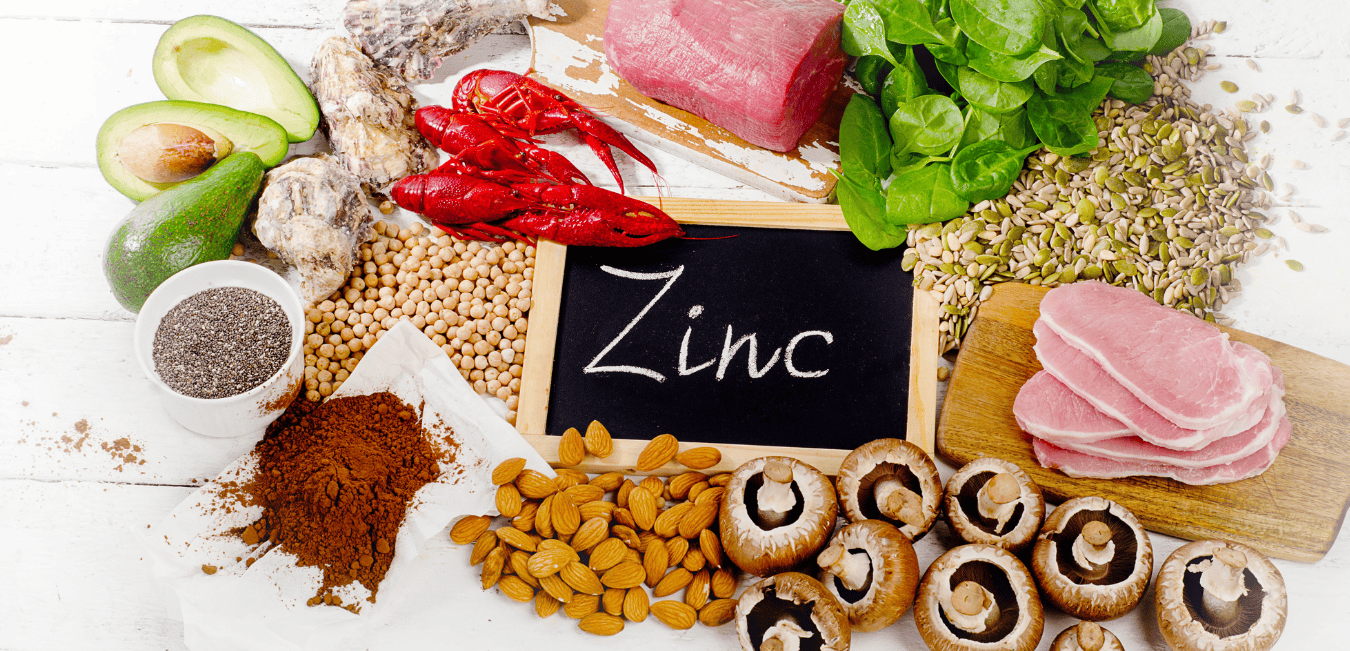
That said, the cumulative picture matters for growing families. Children have high nutritional demands relative to their body size, and they are developing rapidly. Their brains, bones, immune systems, and nervous systems all depend on a consistent, adequate supply of vitamins and minerals. Research confirms that children are among the groups most vulnerable to the effects of suboptimal micronutrient intake, with iron, zinc, and vitamin D among the nutrients most commonly running low in kids (5, 6).
When you factor in that many children are already somewhat selective eaters, that processed foods make up a significant portion of many family diets, and that the nutrient density of whole foods may be somewhat lower than it was a generation ago, the gap between what kids are getting and what they actually need can widen over time.
To learn more about nutrition, read this article: The Basics of Anti-Inflammatory Eating tor the Whole Family
How to Help Your Kids Get More Nutrients from Their Food
Knowing that today’s produce may be less nutrient-dense than it once was can feel overwhelming, but there are straightforward ways to help your children get more vitamins and minerals from their food every day.
- Buy local and organic when possible. Produce grown in well-managed soil and harvested closer to peak ripeness tend to retain more of its nutritional value. Farmers markets and local CSA boxes are great options when budget allows.
- Prioritize variety. Different fruits and vegetables provide different nutrients. A wide variety of colorful produce helps cover more nutritional bases and reduces the impact of any one food being lower in a specific nutrient.
- Don’t peel everything. Many nutrients concentrate in or just under the skin of fruits and vegetables, so leaving the skin on where safe and appropriate preserves more nutritional value. If you are not buying organic, soaking produce in a baking soda and water solution for 12 to 15 minutes before eating is a simple, research-backed way to help remove pesticide residue from the skin before serving it to your kids (7). To learn more, read this article: The Risks of Glyphosate — And Why We’re A Glyphosate Tested Company
- Focus on nutrient-dense whole foods. Foods like grass-fed beef, eggs, wild-caught salmon, legumes, nuts, seeds, and leafy greens remain some of the most reliably nutrient-dense options available regardless of agricultural trends.
- Consider targeted supplementation where needed. Given the combination of factors at play (declining nutrient density in produce, the realities of picky eating, and children’s high nutritional demands) thoughtfully chosen supplements can serve as a practical safety net. Targeted support with nutrients children commonly run low on, such as vitamin D, omega-3 fatty acids, iron, zinc, and probiotics, can help fill the gaps. To learn more about building a supplement routine for your family, read this article: How To Create A Daily Supplement Protocol For Your Family
Summary
Research suggests that fruits and vegetables today may contain somewhat lower levels of certain key nutrients than they did several decades ago, due to factors including the dilution effect of high-yield farming, declining soil health, changes in crop breeding, and rising CO2 levels. Whole foods remain essential and irreplaceable, and variety is your best tool at the grocery store.
The cumulative effect of these changes matters most for growing children, who have high nutritional needs and may already be falling short through diet alone. Focusing on whole foods, variety, and locally grown produce where possible, and considering targeted supplementation, are practical ways parents can respond to a food system that has changed significantly in a single generation.
References
- Davis DR, Epp MD, Riordan HD. Changes in USDA food composition data for 43 garden crops, 1950 to 1999. J Am Coll Nutr. 2004;23(6):669-682. PMID: 15637215.
- Mayer AM. Historical changes in the mineral content of fruits and vegetables. Br Food J. 1997;99(6):207-211. doi: 10.1108/00070709710181540.
- Bhardwaj RL, Parashar A, Parewa HP, Vyas L. An alarming decline in the nutritional quality of foods: the biggest challenge for future generations’ health. Foods. 2024;13(6):877. PMC: PMC10969708.
- Loladze I. Hidden shift of the ionome of plants exposed to elevated CO2 depletes minerals at the base of human nutrition. eLife. 2014;3:e02245. doi: 10.7554/eLife.02245. PMID: 24867639.
- Biesalski HK, Tinz J. Micronutrient deficiency in children. Curr Opin Clin Nutr Metab Care. 2001;4(6):549-552. PMID: 11509111.
- Huynh DTT, et al. Micronutrient deficiency and supplements in schoolchildren and teenagers. Curr Opin Clin Nutr Metab Care. 2025;28(3). PMC: PMC11864051.
- Yang T, Doherty J, Zhao B, Kinchla AJ, Clark JM, He L. Effectiveness of commercial and homemade washing agents in removing pesticide residues on and in apples. J Agric Food Chem. 2017;65(44):9744-9752. doi: 10.1021/acs.jafc.7b03118.